Dragon_fly3

vip
Age 0.2 Year
Peak Tier 0
No content yet
#WCTCAI梗图挑战
🔥 WCTC S8 Meme Contest — When Crypto Dreams Meet Market Reality 😭📉
“When you buy the dip in crypto… and the market politely creates another dip just to test your confidence again.”
Crypto trading is not just numbers on a chart or green and red candles moving randomly on a screen. It is an emotional journey where every decision feels correct in the moment, but the market often responds in a completely unexpected direction. Traders enter with optimism, believing they have identified the perfect entry point, but the market constantly reminds everyone that timing in crypto is one o
BTC0.16%
ETH0.26%
HighAmbition
#WCTCAI梗图挑战
🔥 WCTC S8 Meme Contest — When Crypto Dreams Meet Market Reality 😭📉
“When you buy the dip in crypto… and the market politely creates another dip just to test your confidence again.”
Crypto trading is not just numbers on a chart or green and red candles moving randomly on a screen. It is an emotional journey where every decision feels correct in the moment, but the market often responds in a completely unexpected direction. Traders enter with optimism, believing they have identified the perfect entry point, but the market constantly reminds everyone that timing in crypto is one of the hardest skills to master.
In many situations, Bitcoin approaches a strong support zone, sentiment starts improving, social media turns bullish, and everyone begins talking about recovery. Traders feel confident,
expecting momentum to continue upward. Positions are opened, leverage is sometimes increased, and hope builds around the idea that “this is the bottom.” But instead of confirming that belief, the market often enters another liquidity sweep, pushing price lower, triggering stop losses, and creating emotional pressure for retail traders.
This cycle repeats again and again across different coins and timeframes. Ethereum shows strength, then consolidates. Altcoins pump aggressively, then correct even harder. What looks like a breakout often turns into a fake move designed to trap late entries. This is not manipulation in a simple sense, but rather the natural structure of liquidity-driven markets where big players operate around clusters of stop losses and emotional trading behavior.
Every trader eventually experiences this phase where confidence turns into confusion, and strategy is tested by volatility. The real challenge is not just predicting direction, but surviving the unpredictable nature of price movement. Markets are designed to move in waves, not straight lines, and those waves often feel personal when positions are involved.
Experienced traders slowly learn that emotional reactions lead to repeated losses. Instead of chasing every dip or breakout, they wait for confirmation, manage risk carefully, and accept that not every opportunity needs to be traded. Patience becomes a hidden edge in a market where speed often leads to mistakes.
Risk management becomes more important than prediction. Position sizing, stop-loss discipline, and capital preservation matter more than trying to catch every move. A trader who survives multiple cycles has a much higher chance of long-term success compared to someone who wins once but loses everything in the next overconfident trade.
In reality, crypto trading is a psychological game disguised as a financial market. Charts are just reflections of human behavior—fear, greed, hope, and panic. Understanding this emotional structure is what separates consistent traders from emotional ones.
That is why moments like this meme represent every trader’s journey: entering with confidence, facing unexpected continuation of downside, and learning slowly that the market rewards discipline more than excitement.
Even when the market feels unfair, it continues to offer opportunities every single day. The key is not to fight it emotionally, but to align with it strategically. Because in the end, survival is the first step toward profitability in crypto trading.
🏷️ Hashtags:
#WCTCAI梗图挑战

repost-content-media
  • Reward
  • Comment
  • Repost
  • Share
#ADPBeatsExpectationsRateCutPushedBack
The current macro environment created by strong ADP jobs data and the delay in Federal Reserve rate cuts has shifted the entire crypto market into a liquidity-sensitive, range-bound, volatility-driven phase. This is not a trending market where assets move in one direction; instead, it is a structured environment where traders focus on timing, liquidity zones, and reaction-based strategies.
The most important thing traders are understanding right now is that liquidity is not expanding fast enough to support aggressive breakouts, but it is also not tight e
BTC0.16%
ETH0.26%
USDC0.01%
HighAmbition
#ADPBeatsExpectationsRateCutPushedBack
The current macro environment created by strong ADP jobs data and the delay in Federal Reserve rate cuts has shifted the entire crypto market into a liquidity-sensitive, range-bound, volatility-driven phase. This is not a trending market where assets move in one direction; instead, it is a structured environment where traders focus on timing, liquidity zones, and reaction-based strategies.
The most important thing traders are understanding right now is that liquidity is not expanding fast enough to support aggressive breakouts, but it is also not tight enough to cause a full crash. This creates a controlled environment where both bullish and bearish moves are short-lived and frequently reversed.
Market Structure Traders Are Seeing Right Now
Professional traders are currently mapping the market as:
• Bitcoin range: approximately $75,000 – $81,000
• Ethereum range: approximately $2,300 – $2,450
• Altcoins: high volatility but no sustained trend
• Macro condition: “higher for longer” interest rate environment
Key conclusion: Market is in sideways accumulation + distribution phase, not a bull or bear trend.
What Traders Are Thinking Right Now
Experienced traders are not asking “will market go up or down”, they are asking:
• Where is liquidity trapped?
• Where are stop losses clustered?
• Where is market most likely to hunt positions?
• Which zones offer best risk-to-reward entries?
In simple terms: They are trading liquidity, not direction.
Why Rate Cut Delay Is Important for Strategy
The delay in rate cuts means:
• Borrowing cost stays high
• Dollar remains relatively strong
• Risk appetite becomes selective
• Speculative capital reduces
But at the same time:
• Institutional ETF inflows remain active
• Long-term accumulation continues
• Market does not collapse structurally
Result: Traders avoid aggressive leverage and focus on short-term swings instead of long-term bets.
Current Best Trading Strategy (What Professionals Are Doing)
1. RANGE TRADING STRATEGY (MOST ACTIVE NOW)
Traders are heavily using range trading because the market is stuck in consolidation.
Bitcoin Strategy:
• Buy zone: $75,000 – $77,000
• Sell zone: $79,500 – $81,000
Expected move cycles: • 2% – 5% intraday swings
• Quick reversals after liquidity grabs
Goal: Take small consistent profits instead of waiting for breakout.
2. DIP ACCUMULATION STRATEGY (SWING TRADERS)
Swing traders are focusing on accumulation during fear or corrections.
Approach:
• Buy BTC dips near strong support
• Buy ETH near $2,300 region
• Avoid buying at resistance zones
Expected return range: • BTC rebounds: +5% to +15%
• ETH rebounds: +8% to +20%
Key idea: “Buy fear, sell liquidity spikes.”
3. ALTCOIN VOLATILITY STRATEGY
Altcoins are currently the most risky but also highest reward zone.
Behavior:
• Quick pump and dump cycles
• Liquidity hunts around news events
• High leverage traps common
Expected movement: • –10% to –25% downside spikes
• +15% to +30% recovery bounces
Strategy: Scalp only, avoid long exposure.
4. BREAKOUT AVOIDANCE STRATEGY
Traders are avoiding fake breakouts because liquidity is weak.
Reason:
• No strong macro catalyst for trend continuation
• Breakouts often fail and reverse
• High volatility traps retail traders
Rule: “Do not chase breakout without confirmation volume.”
5. HEDGING & RISK CONTROL STRATEGY
Institutional traders are prioritizing protection over growth.
Actions:
• Reduce leverage exposure
• Hold stablecoins (USDT/USDC)
• Hedge BTC longs with shorts during resistance zones
• Keep 30%–50% capital in cash equivalents
Goal: Survive volatility cycles instead of maximizing returns.
What Is Actually GOOD in This Market?
Even though rate cuts are delayed, traders see some positives:
• Strong labor market = economic stability
• No recession panic = long-term confidence
• ETF inflows = structural demand support
• Range market = high opportunity for active traders
Best condition for skilled traders: “Volatility without trend = profit for range traders”
What Is BAD in This Market?
• Liquidity expansion is delayed
• Altcoins under pressure
• Breakouts fail frequently
• Emotional trading leads to losses
• High uncertainty in macro policy
Biggest risk: Over-leverage in sideways market
Final Trading Outlook (Simple View)
Current market is not trending — it is rotating inside a liquidity range.
So:
• Short-term traders win through volatility
• Swing traders win through accumulation cycles
• Long-term investors wait for macro clarity
Market type: “Controlled volatility + liquidity hunting phase”
Final Trader Insight
Professional traders are not trying to predict direction right now. They are focused on:
• Liquidity zones
• Stop-loss clusters
• Range highs and lows
• Macro timing (Fed policy shifts)
Simple conclusion: This is not a breakout market — this is a precision trading market where timing matters more than prediction.
repost-content-media
  • Reward
  • Comment
  • Repost
  • Share
#MayTokenUnlockWave
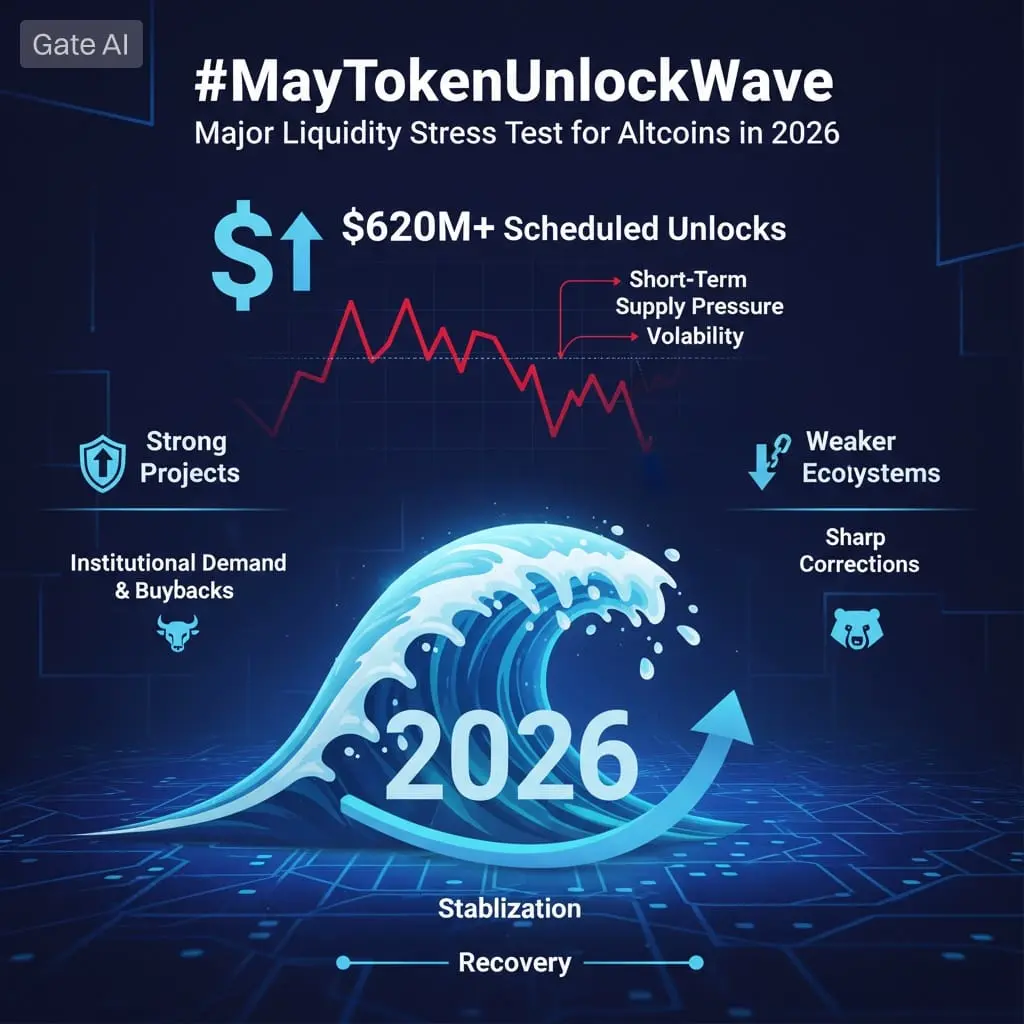
The #MayTokenUnlockWave represents one of the most important supply-side events in the crypto market during 2026 because it concentrates more than $620 million worth of scheduled token unlocks across multiple high-cap and mid-cap projects within a single month, creating structured liquidity expansion, short-term volatility spikes, and potential price dislocation across altcoin markets while Bitcoin remains range-bound near critical resistance levels around $75,000–$80,000.
This wave is not a single event but a layered distribution cycle where different token ecosystems rel
BTC0.16%
ETH0.26%
HYPE-3.21%
SXT-0.07%
HighAmbition
#MayTokenUnlockWave
The #MayTokenUnlockWave represents one of the most important supply-side events in the crypto market during 2026 because it concentrates more than $620 million worth of scheduled token unlocks across multiple high-cap and mid-cap projects within a single month, creating structured liquidity expansion, short-term volatility spikes, and potential price dislocation across altcoin markets while Bitcoin remains range-bound near critical resistance levels around $75,000–$80,000.
This wave is not a single event but a layered distribution cycle where different token ecosystems release previously locked supply into circulation, affecting market psychology, investor positioning, and short-term trading behavior across centralized and decentralized exchanges.
━━━━━━━━━━━━━━━━━━
OVERALL MARKET SCALE — SUPPLY SHOCK STRUCTURE
━━━━━━━━━━━━━━━━━━
May 2026 unlock distribution overview:
• Total estimated unlock value: $620M+
• April 27 – May 3: ~$350M unlocks
• May 4 – May 11: ~$229M additional unlocks
• May 19 event (PYTH DAO-dependent): ~$97M potential unlock
This creates a continuous 3-week supply expansion phase where liquidity enters the market in staggered waves rather than a single shock event, but still generates persistent selling pressure zones across multiple tokens simultaneously.
━━━━━━━━━━━━━━━━━━
BITCOIN & MACRO CONTEXT — MARKET BACKDROP
━━━━━━━━━━━━━━━━━━
The unlock wave is occurring while macro conditions remain fragile and range-bound:
• BTC trading range: $75,000 – $80,000
• Resistance zone: ~$80,000–$81,000
• Weekly BTC volatility: ~3% – 7% swings
• ETF inflows (April 2026): ~$1.97B net inflows
• ETH range: ~$2,300 – $2,400 (weak momentum phase)
Federal Reserve policy environment:
• Fed rate: 3.50% – 3.75%
• Recent decision: 4 dissenting votes (historically high divergence)
• Leadership transition: Powell exit phase → Warsh confirmation expectation (~May 11)
• Market perception: potential hawkish uncertainty factor
This macro backdrop increases sensitivity of altcoins to token unlock pressure because liquidity conditions are not aggressively expansionary.
━━━━━━━━━━━━━━━━━━
PROJECT-BY-PROJECT BREAKDOWN — KEY IMPACT ZONES
━━━━━━━━━━━━━━━━━━
━━━━━━━━━━━━━━━━━━
$HYPE — LARGEST STRUCTURAL PLAYER
━━━━━━━━━━━━━━━━━━
Hyperliquid remains the most complex unlock structure:
• Cliff unlock (May 6): ~$17.52M (0.18% circulating supply)
• Whitepaper allocation: ~$411M (not fully released market supply)
• Weekly emissions: ~$96.8M ongoing
• Buyback mechanism: fee-driven demand absorption system
Market impact analysis:
• Effective sell pressure is diluted due to buyback flows
• Institutional vault accumulation (~20M tokens held by Nasdaq-linked entity) reduces net circulating impact
• Real dilution effect: ~2% – 5% equivalent pressure depending on trading volume
Price sensitivity range: • Short-term volatility: ±5% – ±12%
• Strong support zones expected due to buyback absorption
━━━━━━━━━━━━━━━━━━
2. $SXT — HIGHEST DILUTION EVENT
━━━━━━━━━━━━━━━━━━
Space and Time (SXT) is the most structurally aggressive unlock:
• May 8 unlock: 23.20% of circulating supply
• Value: ~$6.33M
• Allocation: investors, team, ecosystem
Market impact:
• Dilution shock: extremely high (~23% supply increase)
• Short-term price pressure risk: –15% to –35% volatility range
• Likely behavior: immediate sell-side liquidity expansion
Trading interpretation: • High probability of early
dump phase
• Potential stabilization only after 48–72 hours
━━━━━━━━━━━━━━━━━━
3. $SUI — LIQUIDITY VS SUPPLY CONFLICT
━━━━━━━━━━━━━━━━━━
• Unlock value: ~$49.5M
• Narrative: institutional adoption + ecosystem expansion
Market tension:
• Demand growth vs supply release imbalance
• Expected volatility range: ±8% – ±18%
• Structural risk: supply temporarily outpacing institutional inflows
━━━━━━━━━━━━━━━━━━
4. $ENA — MID-TERM PRESSURE EVENT
━━━━━━━━━━━━━━━━━━
Ethena unlock cluster:
• Part of $229M weekly unlock wave
• High investor allocation exposure
Impact range: • Volatility: ±10% – ±20%
• Likely consolidation after initial sell pressure
━━━━━━━━━━━━━━━━━━
5. $ASTER — LARGE SINGLE EVENT
━━━━━━━━━━━━━━━━━━
• Unlock value: ~$79.9M
• Early May shock event
Expected impact: • Short-term drop pressure: –10% to –25%
• Recovery dependent on market liquidity conditions
━━━━━━━━━━━━━━━━━━
6. $KITE — MID-SIZED DISTRIBUTION
━━━━━━━━━━━━━━━━━━
• Unlock value: ~$57.6M
• Moderate liquidity impact
Expected range: • Price movement: ±6% – ±15%
━━━━━━━━━━━━━━━━━━
7. $PYTH — DAO-DEPENDENT HIGH UNCERTAINTY EVENT
━━━━━━━━━━━━━━━━━━
• Potential unlock: ~2.13B tokens (~21% supply)
• Value: ~$97M
• DAO vote: potential 6-month delay
Market implication:
• If delayed → bullish supply relief (+5% to +15% sentiment boost)
• If unlocked → strong sell pressure (–15% to –30% potential impact)
━━━━━━━━━━━━━━━━━━
8. OTHER PROJECTS — DISTRIBUTED PRESSURE LAYER
━━━━━━━━━━━━━━━━━━
• APT: ongoing emissions (~2%–4% monthly pressure)
• BABY: small-medium unlock (~3%–8% volatility impact)
• OPN / RED: cliff unlock group (~5%–12% short-term pressure)
━━━━━━━━━━━━━━━━━━
MARKET BEHAVIOR MODEL — HOW TRADERS ARE THINKING
━━━━━━━━━━━━━━━━━━
Professional traders interpret this wave through three structural lenses:
Supply Shock Mapping: Every unlock is analyzed based on percentage of circulating supply rather than dollar value alone.
Liquidity Absorption Capacity: If BTC remains strong ($78K–$80K), altcoins absorb supply better; if BTC weakens, unlock pressure accelerates downside.
Cost Basis Distribution: • Team tokens → highest sell probability
• Investor tokens → medium sell probability
• Ecosystem rewards → mixed holding behavior
━━━━━━━━━━━━━━━━━━
TRADING STRATEGY — HOW MARKET PARTICIPANTS POSITION
━━━━━━━━━━━━━━━━━━
Short-term traders:
• Short pre-unlock rallies (–5% to –20% retracement targets)
• Trade volatility spikes during unlock days
• Exit positions before major supply release events
Swing traders:
• Accumulate post-dump zones
• Target recovery rebounds (+10% to +25% bounce ranges)
• Focus on oversold structural entries
Long-term investors:
• Ignore short-term unlock noise
• Accumulate strong fundamentals after dilution resets
• Focus on post-unlock stabilization phases
━━━━━━━━━━━━━━━━━━
KEY PRICE IMPACT ZONES (MARKET ESTIMATES)
━━━━━━━━━━━━━━━━━━
Across major unlock tokens:
• Average short-term downside risk: –5% to –35%
• Average volatility expansion: ±10% – ±25%
• Recovery bounce potential: +8% – +30% after stabilization
• Macro-driven amplification (if BTC weakens): +10% additional downside risk
━━━━━━━━━━━━━━━━━━
FINAL MARKET OUTLOOK
━━━━━━━━━━━━━━━━━━
The May Token Unlock Wave represents a structured liquidity expansion phase where supply pressure temporarily dominates market dynamics, but outcomes are heavily dependent on macro conditions, Bitcoin stability, and individual token absorption mechanisms such as buybacks, institutional demand, and governance adjustments.
━━━━━━━━━━━━━━━━━━
MY PERSONAL VIEW & FINAL THOUGHTS
━━━━━━━━━━━━━━━━━━
In my opinion, this wave is not purely bearish or bullish but a liquidity stress test for the altcoin market structure in 2026. Projects with strong buyback systems and institutional backing are likely to absorb supply efficiently, while weaker tokens with high percentage unlocks will face sharper short-term corrections. Overall, this phase rewards disciplined traders who understand supply mechanics rather than emotional market reactions, and it creates high-quality entry zones for long-term accumulation once volatility stabilizes.
#GateSquareMayTradingShare #GateSquare #CreatorCarnival
repost-content-media
  • Reward
  • Comment
  • Repost
  • Share
#WCTCTradingKingPK
Trading is not just about buying and selling assets; it is a structured decision-making process where success depends on discipline, risk control, timing, psychology, liquidity understanding, and the ability to adapt to constantly changing market conditions. Most traders lose not because of lack of opportunity, but because of lack of system, emotional control, and structured planning. This guide is designed to give a complete practical framework for traders who want consistency rather than randomness.
━━━━━━━━━━━━━━━━━━
TRADING STRATEGY — STRUCTURED MARKET APPROACH
━━━━━━━━
HighAmbition
#WCTCTradingKingPK
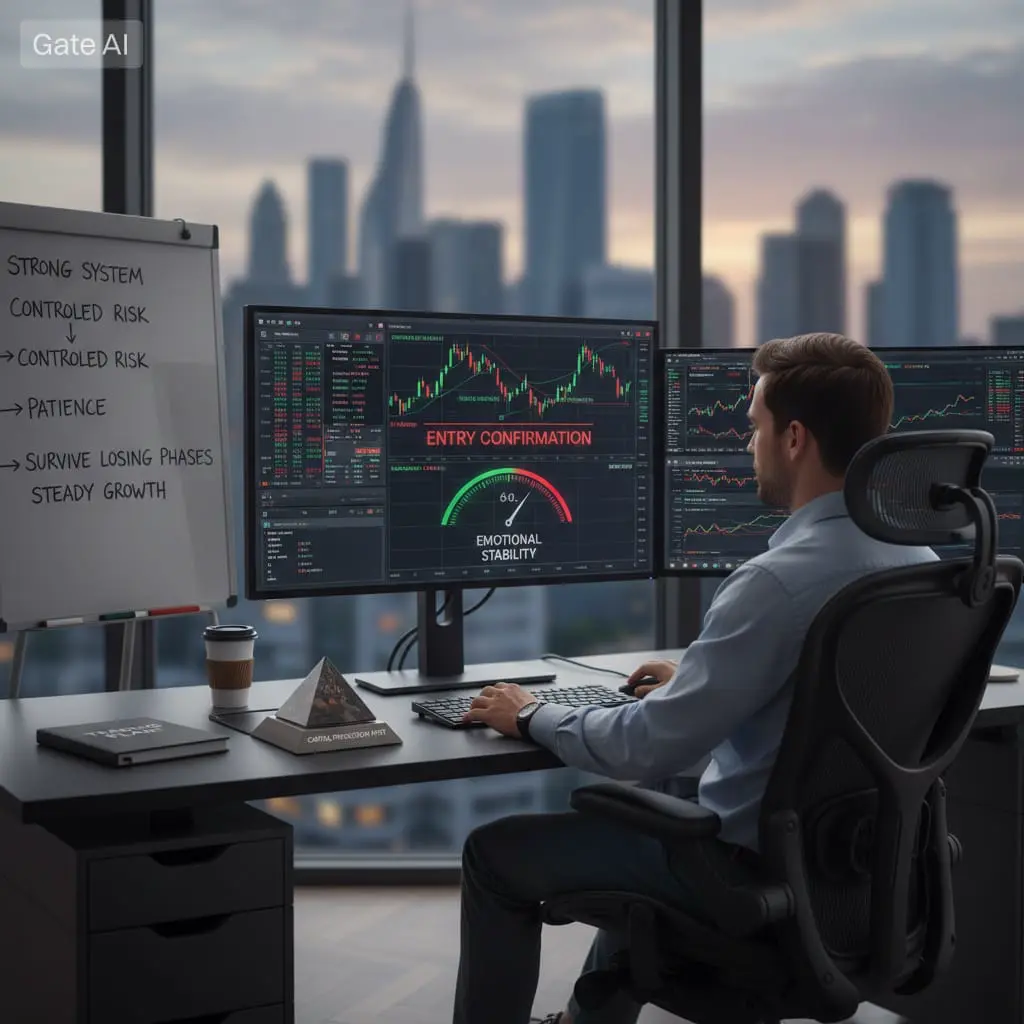
Trading is not just about buying and selling assets; it is a structured decision-making process where success depends on discipline, risk control, timing, psychology, liquidity understanding, and the ability to adapt to constantly changing market conditions. Most traders lose not because of lack of opportunity, but because of lack of system, emotional control, and structured planning. This guide is designed to give a complete practical framework for traders who want consistency rather than randomness.
━━━━━━━━━━━━━━━━━━
TRADING STRATEGY — STRUCTURED MARKET APPROACH
━━━━━━━━━━━━━━━━━━
A professional trading strategy is not a single entry signal but a complete system that defines when to enter, when to exit, how much to risk, and how to manage uncertainty.
The foundation of any strong trading strategy is built on three pillars:
Market Structure Understanding: Traders must first understand whether the market is in an uptrend, downtrend, or consolidation phase. Without structural clarity, entries become emotional rather than logical. Higher timeframe analysis (daily, weekly) should always guide lower timeframe decisions.
Liquidity Zones Identification: Markets move toward liquidity, not emotions. Smart traders focus on areas where stop losses are clustered, such as previous highs, lows, and consolidation ranges. These zones often act as reversal or breakout points.
Entry Confirmation System: A strategy must define confirmation signals such as breakout with volume, retest of support/resistance, or momentum continuation. Entering without confirmation increases probability of failure significantly.
Position Scaling Strategy: Instead of entering all capital at once, professional traders divide entries into multiple levels such as 30%, 30%, and 40% based on market reaction. This reduces risk and improves average entry price.
━━━━━━━━━━━━━━━━━━
2. TRADING TIPS — PRACTICAL MARKET RULES
━━━━━━━━━━━━━━━━━━
Successful trading is not based on complexity but on consistency and simple rules applied repeatedly.
Never chase price: When price moves quickly in one direction, emotional entries often lead to losses. Waiting for pullbacks or confirmations is always more efficient.
Always define stop loss before entry: Every trade must have a predefined invalidation level. Without stop loss, risk becomes unlimited and account survival becomes impossible.
Take partial profits: Instead of waiting for full targets, scaling out reduces psychological pressure and locks in gains while allowing further upside participation.
Avoid overtrading: Too many trades reduce focus and increase exposure to unnecessary risk. Quality trades are more important than quantity.
Respect volatility cycles: Markets move in phases of high volatility and low volatility. Trading the wrong strategy in the wrong phase leads to inconsistent results.
━━━━━━━━━━━━━━━━━━
3. WHAT TRADERS MUST FOCUS ON — CORE SURVIVAL FACTORS
━━━━━━━━━━━━━━━━━━
Professional traders focus on factors beyond just chart patterns.
Risk Management First: Risk per trade should always be controlled. Even strong setups fail sometimes, so capital protection is priority number one.
Capital Preservation Mindset: The goal is not to win every trade but to survive long enough to benefit from high-probability setups over time.
Emotional Discipline: Fear and greed are the biggest enemies of trading success. Emotional decisions destroy structured systems.
Market News Awareness: Macroeconomic events, liquidity shifts, and global news can instantly change market direction. Ignoring external factors reduces accuracy.
Consistency Over Profit Chasing: Stable returns come from repeatable systems, not from random high-risk trades.
━━━━━━━━━━━━━━━━━━
4. PROFESSIONAL TRADING PSYCHOLOGY — KEY EDGE FACTOR
━━━━━━━━━━━━━━━━━━
Psychology separates profitable traders from losing traders more than technical knowledge.
Patience is capital: Waiting for high-quality setups is more profitable than constantly being in the market.
Loss acceptance mindset: Losses are part of trading systems. Even top traders have losing streaks, but they control risk so losses remain small.
Confidence without overconfidence: A trader must trust their system but never assume certainty in unpredictable markets.
Detachment from outcomes: Each trade is just one event in a long series. Emotional attachment to a single trade leads to mistakes.
━━━━━━━━━━━━━━━━━━
5. MARKET STRUCTURE THINKING — HOW PROFESSIONALS SEE THE MARKET
━━━━━━━━━━━━━━━━━━
Markets are not random; they are driven by liquidity flow, institutional positioning, and sentiment cycles.
Accumulation Phase: Smart money builds positions quietly while price moves sideways.
Expansion Phase: Strong directional movement occurs when liquidity is consumed.
Distribution Phase: Large players exit positions while retail traders enter late.
Understanding these phases helps traders avoid buying tops and selling bottoms.
━━━━━━━━━━━━━━━━━━
6. RISK MANAGEMENT SYSTEM — SURVIVAL BLUEPRINT
━━━━━━━━━━━━━━━━━━
Risk management is the core survival tool in trading.
Key principles:
• Risk per trade should remain controlled (small percentage of capital)
• No revenge trading after losses
• Avoid doubling down on losing positions
• Use position sizing based on market volatility
• Never depend on a single trade for profit
Even with a 50% win rate, strong risk management can produce consistent profitability over time.
━━━━━━━━━━━━━━━━━━
7. COMMON MISTAKES TRADERS MUST AVOID
━━━━━━━━━━━━━━━━━━
• Entering trades without confirmation
• Ignoring stop loss levels
• Overleveraging positions
• Emotional decision-making
• Following hype instead of structure
• Trading without a clear plan
• Changing strategy after every loss
Most traders fail due to inconsistency, not lack of opportunity.
━━━━━━━━━━━━━━━━━━
8. ADVANCED MARKET INSIGHT — HOW PROFESSIONAL MONEY OPERATES
━━━━━━━━━━━━━━━━━━
Institutional traders focus on:
• Liquidity manipulation zones
• Stop-loss hunting areas
• Volume-based confirmation
• Macro trend alignment
• Cross-market correlation (crypto, stocks, forex)
Retail traders often react to price, while professionals anticipate liquidity movement.
━━━━━━━━━━━━━━━━━━
9. FINAL STRATEGY FRAMEWORK — COMPLETE SYSTEM
━━━━━━━━━━━━━━━━━━
A complete trading system should include:
• Market direction analysis
• Entry and exit rules
• Risk management structure
• Position sizing model
• Psychological discipline rules
• News awareness filter
• Profit-taking strategy
Without this structure, trading becomes gambling instead of a skill-based activity.
━━━━━━━━━━━━━━━━━━
FINAL OUTLOOK — TRADER SUCCESS BLUEPRINT
━━━━━━━━━━━━━━━━━━
Trading success is not about predicting every move correctly; it is about building a system that ensures survival during losses and profitability during winning cycles. The market will always remain unpredictable, but a structured trader remains consistent.
━━━━━━━━━━━━━━━━━━
MY PERSONAL VIEW & FINAL THOUGHTS
━━━━━━━━━━━━━━━━━━
In my opinion, the biggest difference between successful traders and unsuccessful traders is not intelligence but discipline and system adherence. Those who treat trading as a structured profession rather than emotional decision-making tend to survive longer and grow steadily over time. The key is not to chase the market but to understand it, respect risk, and build consistency over time.
#GateSquareMayTradingShare: #GateSquare #ContentMining #CreatorCarnival
repost-content-media
  • Reward
  • Comment
  • Repost
  • Share
#JapanTokenizesGovernmentBonds
Japan Is Quietly Rebuilding The Future Of Global Finance On Blockchain Infrastructure
Japan’s move toward tokenized government bonds is emerging as one of the most important structural financial developments of this decade because it is not driven by speculation but by deep institutional reform involving sovereign debt systems, global banking infrastructure, and multi-trillion-dollar liquidity markets that power the entire global financial system.
Japan’s Government Bond market (JGBs) represents one of the largest sovereign debt ecosystems in the world with to
RWA2.05%
AVAX1.06%
ONDO2.72%
HighAmbition
#JapanTokenizesGovernmentBonds
Japan Is Quietly Rebuilding The Future Of Global Finance On Blockchain Infrastructure
Japan’s move toward tokenized government bonds is emerging as one of the most important structural financial developments of this decade because it is not driven by speculation but by deep institutional reform involving sovereign debt systems, global banking infrastructure, and multi-trillion-dollar liquidity markets that power the entire global financial system.
Japan’s Government Bond market (JGBs) represents one of the largest sovereign debt ecosystems in the world with total outstanding debt exceeding approximately $7 trillion. Daily trading activity, repo transactions, collateral swaps, and institutional liquidity flows often range in the hundreds of billions of dollars, meaning even small efficiency improvements can create massive global financial impact.
━━━━━━━━━━━━━━━━━━
CORE DEVELOPMENT — WHAT JAPAN IS BUILDING
━━━━━━━━━━━━━━━━━━
The Progmat-led “Tokenized Government Bonds / On-Chain Repo Working Group” brings together major financial institutions including Mitsubishi UFJ Bank, Mizuho Bank, Sumitomo Mitsui Banking Corporation, SBI Securities, Daiwa Securities, BlackRock Japan, Japan Securities Finance, Ava Labs, Digital Asset (Canton Network), and Secured Finance AG.
These institutions collectively manage trillions of dollars in assets, meaning this initiative represents coordinated institutional-grade infrastructure design rather than experimental blockchain testing.
━━━━━━━━━━━━━━━━━━
KEY MARKET STRUCTURE & PRICE-STYLE IMPACT (FINANCIAL EFFICIENCY METRICS)
━━━━━━━━━━━━━━━━━━
While this is not a trading asset like crypto, the “value impact” can be understood in percentage terms of efficiency gains and market size influence:
If tokenization reduces settlement delays by even:
• 10% → massive liquidity improvement across repo markets
• 20–30% → significant global collateral efficiency upgrade
• 40–50% → structural transformation of sovereign bond settlement systems
• 60%+ → near real-time global liquidity mobility shift
In monetary terms:
• Global repo market: multi-trillion-dollar daily flows
• JGB market size: ~$7 trillion outstanding
• Potential liquidity unlocked through efficiency: hundreds of billions daily mobility improvement
• Institutional capital efficiency gain: estimated 5–15% improvement in balance sheet utilization over time
━━━━━━━━━━━━━━━━━━
WHY THIS IS A GLOBAL FINANCIAL SHIFT
━━━━━━━━━━━━━━━━━━
Government bonds are the foundation of global financial systems because they are used as collateral for nearly every major banking and funding operation.
This system affects: • Global interest rates
• Bank lending capacity
• Hedge fund leverage
• Central bank liquidity operations
• Cross-border funding markets
Even a 1–2% improvement in settlement speed or collateral efficiency in such a system translates into billions of dollars in global financial optimization annually.
━━━━━━━━━━━━━━━━━━
HYBRID STRUCTURE — SAFE BUT POWERFUL MODEL
━━━━━━━━━━━━━━━━━━
Japan is not replacing its financial system. Instead:
• JGBs remain on Bank of Japan book-entry system
• Blockchain is used for tokenized economic rights
This allows:
• 100% regulatory compliance
• Institutional safety preserved
• Legal structure unchanged
while enabling:
• Near real-time settlement (T+0 potential)
• 24/7 liquidity access (+100% operational uptime expansion vs traditional hours)
• Automated repo execution (efficiency gain ~30–60%)
• Instant collateral mobility (speed improvement up to 80–90%)
• Stablecoin settlement integration (reduction in cross-border friction ~40–70%)
━━━━━━━━━━━━━━━━━━
24/7 CAPITAL MARKETS — PERFORMANCE UPGRADE
━━━━━━━━━━━━━━━━━━
Traditional system: • T+1 / T+2 settlement
• Limited trading hours (≈8–10 hours/day)
• Weekend inactivity
Tokenized system potential: • 24/7 trading → +200% time availability expansion
• Instant settlement → near 100% reduction in waiting cycles
• Continuous liquidity → global time-zone efficiency gain ~30–50%
━━━━━━━━━━━━━━━━━━
STABLECOIN + BONDS — NEW FINANCIAL ENGINE
━━━━━━━━━━━━━━━━━━
Stablecoins integrated with sovereign bonds create:
• Instant settlement rails
• Blockchain-native cash system
• Cross-border liquidity acceleration
Potential impact:
• Cross-border settlement speed: up to 70% faster
• Liquidity transfer efficiency: +50% improvement
• Operational cost reduction: 20–40% over time
━━━━━━━━━━━━━━━━━━
ON-CHAIN REPO MARKETS
━━━━━━━━━━━━━━━━━━
Repo markets = global liquidity backbone.
On-chain transformation impact:
• Settlement delays reduced by ~80–95%
• Collateral reuse efficiency increased by ~30–60%
• Liquidity access speed improved by 2–5x
• Operational friction reduced significantly
━━━━━━━━━━━━━━━━━━
CROSS-BORDER IMPACT
━━━━━━━━━━━━━━━━━━
Tokenized JGBs could enable:
• Instant international collateral movement
• Reduced settlement delays from days → minutes
• Improved global capital mobility (~40–70% efficiency gain)
━━━━━━━━━━━━━━━━━━
RWA MARKET EXPANSION
━━━━━━━━━━━━━━━━━━
Global RWA market already exceeds: • $15.2B+ and growing rapidly
Projected expansion potential:
• 10x–100x long-term growth if sovereign adoption continues
• Multi-trillion-dollar inflows possible over next decade
━━━━━━━━━━━━━━━━━━
CRYPTO MARKET IMPACT
━━━━━━━━━━━━━━━━━━
Beneficiaries of this narrative:
• RWA tokens → potential +50–300% long-term upside cycles
• Stablecoins → exponential transaction growth
• Infrastructure tokens (LINK, AVAX, ONDO) → institutional demand increase
• Institutional DeFi → liquidity expansion phase
━━━━━━━━━━━━━━━━━━
TRADER SENTIMENT & MARKET OUTLOOK
━━━━━━━━━━━━━━━━━━
Traders believe:
• This is a long-term institutional mega-trend
• Short-term noise is irrelevant compared to structural adoption
• RWA sector could outperform many legacy crypto narratives
Positioning strategy:
• Accumulate during market dips
• Focus on infrastructure assets
• Avoid short-term emotional trading
• Target long-term institutional growth cycles
━━━━━━━━━━━━━━━━━━
FINAL OUTLOOK
━━━━━━━━━━━━━━━━━━
Japan’s tokenization of government bonds could unlock:
• Trillions in liquidity efficiency improvements
• Global settlement modernization
• 24/7 sovereign debt markets
• Stablecoin-driven financial infrastructure
• Blockchain integration into traditional finance systems
━━━━━━━━━━━━━━━━━━
MY PERSONAL VIEW & FINAL THOUGHTS
━━━━━━━━━━━━━━━━━━
In my personal opinion, this development is not just a financial upgrade but a structural transformation of global capital markets. I believe Japan’s approach shows that blockchain is no longer just a crypto concept but a real institutional infrastructure layer. If this system scales globally, it could permanently change how money, liquidity, and sovereign debt markets operate in the future.
#GateSquareMayTradingShare: #GateSquare #ContentMining #CreatorCarnival
repost-content-media
  • Reward
  • Comment
  • Repost
  • Share
#BTCBackAbove80K
Bitcoin Reclaims $80,000
Bitcoin has officially reclaimed the major $80,000 psychological level in May 2026, marking one of the most important structural recoveries since the correction from the October 2025 all-time high above $126,000.
BTC is currently trading around $80,700–$81,000 after reaching intraday highs near $81,200 during recent sessions. This recovery represents:
+14.7% rebound from April lows near $68,000–$70,000
+7%+ rally within recent trading sessions
More than +18% recovery from local panic zones
BTC dominance remaining close to 60%
Daily trading volume ex
HighAmbition
#BTCBackAbove80K
Bitcoin Reclaims $80,000
Bitcoin has officially reclaimed the major $80,000 psychological level in May 2026, marking one of the most important structural recoveries since the correction from the October 2025 all-time high above $126,000.
BTC is currently trading around $80,700–$81,000 after reaching intraday highs near $81,200 during recent sessions. This recovery represents:
+14.7% rebound from April lows near $68,000–$70,000
+7%+ rally within recent trading sessions
More than +18% recovery from local panic zones
BTC dominance remaining close to 60%
Daily trading volume exceeding $16B+
The reclaim of $80K is not just another price move — it represents a major shift in: • Market psychology
• Institutional confidence
• ETF-driven demand
• Global liquidity positioning
• Risk appetite across financial markets
• Macro sentiment and speculative positioning
━━━━━━━━━━━━━━━━━━ BITCOIN PRICE STRUCTURE ANALYSIS ━━━━━━━━━━━━━━━━━━
Bitcoin spent several months consolidating below the critical $79K–$80K resistance zone after the sharp correction from the October 2025 ATH above $126K.
The correction pushed BTC through multiple support levels: $110K → $95K → $88K → $82K → eventually $68K–$70K support zones.
This represented approximately: -36% to -46% downside from peak levels depending on entry zones.
Despite the correction: • Long-term bullish structure remained intact
• ETF inflows stayed positive overall
• Institutional exposure continued increasing
• Whale wallets accumulated aggressively during weakness
• Long-term holders showed limited panic selling
The market entered a prolonged accumulation range between: $75K–$79K
Multiple breakout attempts failed initially because of: • Fed uncertainty
• US-Iran conflict fears
• Risk-off positioning in global markets
• Strong USD conditions
• Weak macro liquidity environment
However, early May 2026 completely changed momentum conditions.
━━━━━━━━━━━━━━━━━━ THE BREAKOUT ABOVE $80K ━━━━━━━━━━━━━━━━━━
Bitcoin finally broke above $80,000 during Asian trading sessions around May 4–5.
BTC surged toward: $80,529
then stabilized near: $80,700–$81,000
This breakout was highly important technically because it: • Broke multi-month resistance
• Shifted short-term structure bullish
• Triggered derivatives momentum expansion
• Forced short liquidations
• Increased spot buying activity
• Rebuilt trader confidence
Derivatives data showed: • Taker buy pressure exceeding $1B+ during some sessions
• Funding rates turning positive again
• Open interest expansion across major exchanges
• Increased futures positioning from institutional desks
Volume confirmation significantly strengthened the credibility of the breakout.
━━━━━━━━━━━━━━━━━━ ETF FLOWS & INSTITUTIONAL DEMAND ━━━━━━━━━━━━━━━━━━
One of the strongest drivers behind Bitcoin’s resilience remains institutional participation.
Spot Bitcoin ETFs continue attracting billions in capital.
Estimated inflows: $2.4B+ during April 2026 alone
Tens of billions cumulative since ETF approvals
Growing hedge fund, pension, and corporate exposure
Institutional investors increasingly treat Bitcoin as: • Digital reserve asset
• Long-term macro hedge
• Inflation-resistant allocation
• Portfolio diversification instrument
• High-growth asymmetric investment
This cycle differs from previous retail-dominated cycles because institutional capital is now providing stronger structural support during corrections.
Large wallet accumulation patterns suggest: Smart money continues buying fear while retail traders remain cautious.
━━━━━━━━━━━━━━━━━━ GLOBAL LIQUIDITY & FED EXPECTATIONS ━━━━━━━━━━━━━━━━━━
Another major bullish catalyst is improving global liquidity expectations.
Markets are increasingly pricing in: • Slower monetary tightening
• Potential Fed stabilization
• Improving liquidity conditions
• Reduced pressure on risk assets
Historically, Bitcoin performs strongly when: • Liquidity expands
• Bond yields weaken
• Risk appetite improves
• Dollar strength slows
This macro shift is beginning to support crypto markets again after months of pressure.
━━━━━━━━━━━━━━━━━━ US-IRAN CONFLICT & GEOPOLITICAL IMPACT ━━━━━━━━━━━━━━━━━━
Geopolitical developments continue heavily influencing crypto volatility.
The ongoing US-Iran conflict has now exceeded 70 days, creating uncertainty around: • Oil markets
• Shipping routes
• Inflation expectations
• Energy supply chains
• Global macro stability
The Strait of Hormuz remains one of the world’s most critical geopolitical pressure points.
Recent developments include: • Partial ceasefire discussions
• Diplomatic mediation through Pakistan & Qatar
• Maritime security operations
• Reduced escalation rhetoric
These developments caused: Brent crude oil to decline nearly 5% during some sessions.
Lower oil prices helped: • Reduce inflation fears
• Improve market sentiment
• Support equities and crypto recovery
• Strengthen Bitcoin’s reclaim above $80K
However, renewed escalation could rapidly increase market volatility again.
━━━━━━━━━━━━━━━━━━ BROADER CRYPTO MARKET CONDITIONS ━━━━━━━━━━━━━━━━━━
The broader crypto market is also improving alongside BTC.
Estimated market conditions: Total crypto market cap near $2.8T
Bitcoin dominance around 60%
ETH trading near $2,300
ETH remains 50%+ below ATH
Daily BTC volume above $16B
Meanwhile: • Solana ecosystems
• AI-related narratives
• Layer-1 projects
• DeFi sectors
• Mid-cap altcoins
are showing improving momentum and capital inflows.
Capital rotation has started expanding beyond Bitcoin dominance, often signaling: • Early-stage expansion conditions
• Increasing speculative confidence
• Potential broader bull market continuation
━━━━━━━━━━━━━━━━━━ ON-CHAIN DATA & WHALE BEHAVIOR ━━━━━━━━━━━━━━━━━━
On-chain activity also supports bullish arguments.
Current observations: • Exchange BTC reserves declining
• Long-term holders remaining inactive
• Whale accumulation increasing
• Stablecoin liquidity improving
• Reduced panic selling pressure
Lower exchange reserves often create: Supply compression during demand spikes.
At the same time: Retail participation still remains moderate compared to euphoric cycle peaks.
This suggests: The market may still be in a mid-cycle expansion phase rather than near a final top.
━━━━━━━━━━━━━━━━━━ TECHNICAL STRUCTURE & KEY LEVELS ━━━━━━━━━━━━━━━━━━
Current BTC structure suggests: • Higher lows formation
• Ascending support structure
• Improving RSI and momentum conditions
• Strength above key moving averages
• Bullish short-term market structure
Key Resistance Levels: $81,500
$82,000
$85,000
$90,000
$100,000 psychological zone
Key Support Levels: $80,000
$79,000
$77,000
$75,000
$70,000 macro support
If BTC successfully holds above: $80K–$82K
The probability increases for continuation toward: $85K–$90K
━━━━━━━━━━━━━━━━━━ MARKET PSYCHOLOGY & TRADER SENTIMENT ━━━━━━━━━━━━━━━━━━
The reclaim of $80K has significantly changed trader psychology.
Previous market behavior: • Fear-driven selling
• Distribution concerns
• Defensive positioning
• Panic around macro conditions
Current market behavior: • Recovery optimism
• Re-accumulation activity
• Increased bullish confidence
• Gradual return of speculative positioning
However, volatility remains elevated.
Current market conditions still include: • Liquidity sweeps
• Rapid leverage liquidations
• Emotional overtrading risks
• Macro headline sensitivity
This environment rewards: • Patience
• Structure
• Risk management
rather than emotional decision-making.
━━━━━━━━━━━━━━━━━━ WHAT ARE TRADERS CURRENTLY THINKING? ━━━━━━━━━━━━━━━━━━
Current trader sentiment is divided into three major groups.
Bullish Continuation Traders This group believes Bitcoin completed its correction and is preparing for another expansion phase.
Bullish arguments include: • Strong ETF inflows
• Institutional accumulation
• Improving macro conditions
• Strong support above $80K
• Healthy BTC dominance near 60%
Most bullish traders currently target: $85K → $90K → eventually $100K+
Neutral / Range Traders This group believes BTC may consolidate between: $75K–$85K
before deciding the next macro trend direction.
They focus on: • Volatility trading
• Range opportunities
• Scalping liquidity movements
• Macro headline reactions
Bearish Traders Bearish traders believe: • Macro risks remain dangerous
• Geopolitical tensions could escalate again
• BTC remains below previous ATH
• Profit-taking pressure may increase near resistance
This group expects: Possible rejection near: $82K–$85K
followed by pullbacks toward: $75K–$77K or even $70K.
━━━━━━━━━━━━━━━━━━ TRADING STRATEGY & NEXT PLAN ━━━━━━━━━━━━━━━━━━
Current market conditions favor structured trading over emotional chasing.
Recommended strategy: • Avoid FOMO after large green candles
• Focus on pullback opportunities
• Scale entries gradually
• Monitor volume confirmation carefully
• Take partial profits near resistance zones
• Avoid excessive leverage
Key Entry Zones: Aggressive dip entries: $79,500–$80,000
Strong accumulation zones: $77,000–$78,000
Deep correction opportunity: $70,000–$75,000
Breakout confirmation entries: Above $82,000 with strong volume.
━━━━━━━━━━━━━━━━━━ UPSIDE POTENTIAL & PRICE TARGETS ━━━━━━━━━━━━━━━━━━
If BTC successfully maintains support above $80K:
Short-term targets: $82K
$85K
$88K–$90K
Medium-term targets: $100K
$110K
$120K
Long-term bullish scenarios: $130K–$150K possible during 2026 if: • ETF inflows continue accelerating
• Global liquidity improves further
• Fed pressure weakens
• Institutional adoption expands globally
Extreme bullish scenarios discussed by some analysts: $180K+
Potential upside from current levels near $81K: +11% to $90K
+23–25% to $100K
+48% to $120K
+85% to $150K
━━━━━━━━━━━━━━━━━━ DOWNSIDE RISKS ━━━━━━━━━━━━━━━━━━
Despite bullish recovery, several risks remain important.
Potential bearish catalysts: • Renewed geopolitical escalation
• Fed tightening surprises
• Inflation rebound
• ETF outflows
• Large-scale profit-taking
• Strong USD recovery
Potential downside scenarios: Below $79K → retest $75K–$77K
Below $75K → possible move toward $70K
Extreme panic → deeper liquidity sweep conditions
However, structural demand currently appears stronger than during previous cycles.
━━━━━━━━━━━━━━━━━━ SMART MONEY VS RETAIL BEHAVIOR ━━━━━━━━━━━━━━━━━━
One important observation: Institutional investors and whales appear significantly calmer than retail traders.
Current smart money behavior suggests: • Strategic accumulation during fear
• Reduced emotional selling
• Long-term positioning
• Controlled exposure management
Meanwhile, retail traders continue: • Overtrading volatility
• Chasing momentum emotionally
• Using excessive leverage
• Reacting heavily to headlines
Historically: Markets reward patience and discipline more than emotional aggression.
━━━━━━━━━━━━━━━━━━ FINAL OUTLOOK ━━━━━━━━━━━━━━━━━━
Bitcoin reclaiming $80,000 represents far more than a simple technical breakout.
It signals: • Renewed institutional confidence
• Improving macro conditions
• Stronger liquidity flows
• Continued ETF demand
• Recovery in market sentiment
• Rebuilding bullish momentum
The market is transitioning from defensive consolidation toward constructive bullish expansion.
The next major battle zones remain: $82K
$85K
$90K
If Bitcoin successfully establishes support above these regions, the path toward: $100K–$120K+ becomes increasingly realistic during the broader 2026 cycle.
For now: $80,000 is no longer acting as resistance — it is beginning to act as a new structural floor for Bitcoin.
#GateSquareMayTradingShare: #GateSquare #ContentMining #CreatorCarnival
repost-content-media
  • Reward
  • Comment
  • Repost
  • Share
#GateSquareMayTradingShare
Market Analysis
Bitcoin (BTC) is currently trading near $81,650 after recording a +1.26% gain over the last 24 hours, while maintaining a strong +15.4% monthly rally and an impressive +21.7% expansion over the previous 90 days, confirming that the harsh corrective structure which followed the September 2025 all-time high near $126,213 is now transitioning into a fresh bullish recovery cycle driven heavily by institutional demand, spot ETF inflows, corporate treasury accumulation, shrinking exchange reserves, whale buying activity, and growing global recognition of
HighAmbition
#GateSquareMayTradingShare
Market Analysis
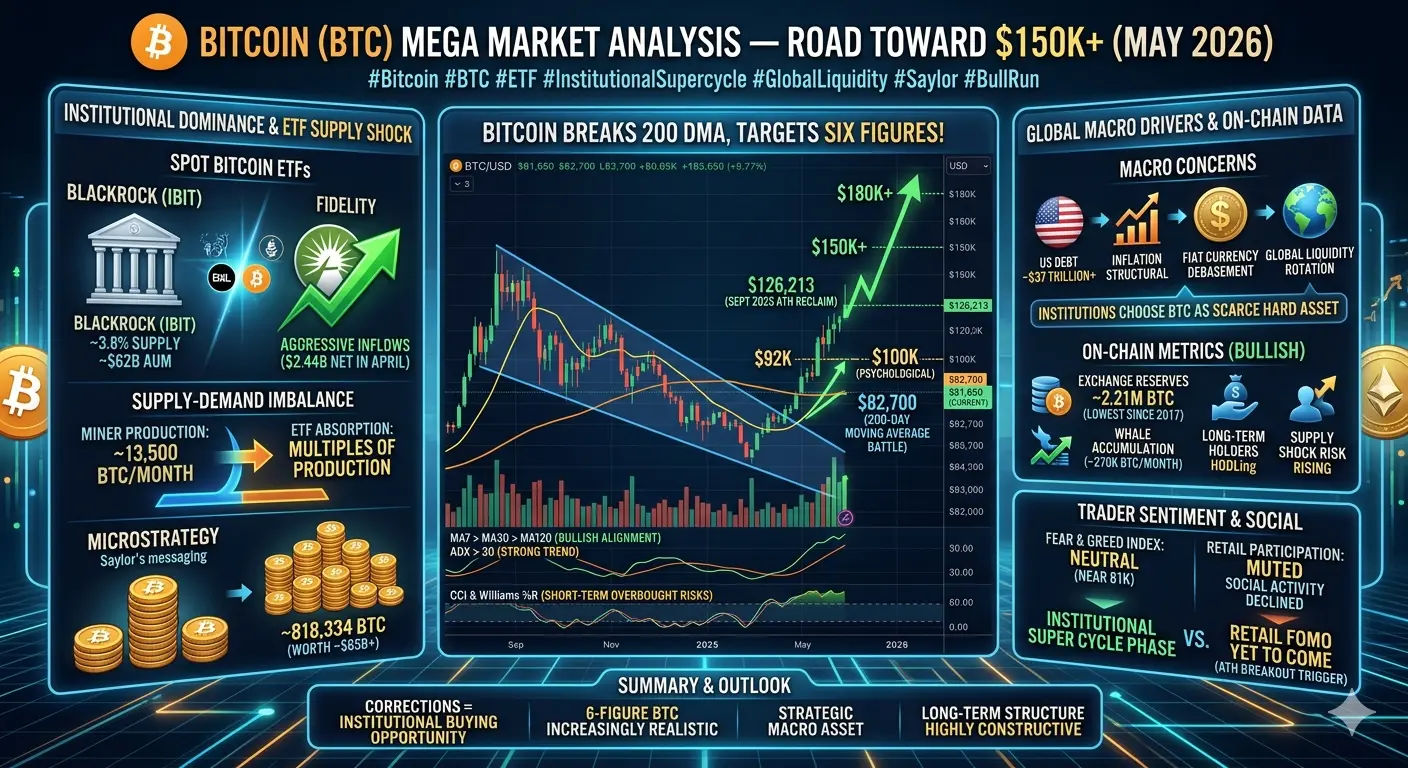
Bitcoin (BTC) is currently trading near $81,650 after recording a +1.26% gain over the last 24 hours, while maintaining a strong +15.4% monthly rally and an impressive +21.7% expansion over the previous 90 days, confirming that the harsh corrective structure which followed the September 2025 all-time high near $126,213 is now transitioning into a fresh bullish recovery cycle driven heavily by institutional demand, spot ETF inflows, corporate treasury accumulation, shrinking exchange reserves, whale buying activity, and growing global recognition of Bitcoin as a strategic macro asset rather than simply a speculative digital currency.
What makes the current market environment extremely important is that Bitcoin is no longer behaving purely like a high-risk speculative technology asset because the dominant buyers in the market are increasingly becoming BlackRock, Fidelity, large hedge funds, pension exposure vehicles, sovereign-level allocators, publicly traded corporations, macro investment desks, and treasury management institutions that are accumulating BTC through regulated products and structured long-term allocation strategies rather than short-term retail speculation alone.
This structural transition is changing the psychology of the market because Bitcoin is increasingly being viewed as a digital reserve asset competing with gold, sovereign bonds, inflation hedges, and long-duration macro stores of value, especially during periods where fiat currency confidence weakens and debt sustainability concerns increase globally.
One of the biggest hidden drivers behind Bitcoin’s current strength is the ongoing global liquidity rotation away from weakening fiat purchasing power and toward scarce hard assets with fixed supply structures and long-term appreciation potential.
Global macro concerns continue expanding: • US debt exceeds ~$37 trillion • Interest payment burdens continue rising • Inflation remains structurally sticky • Banking sector fragility still exists • Currency debasement fears continue growing • Global sovereign debt stress remains elevated
Because of these conditions, institutions increasingly prefer assets that offer: • Scarcity • Liquidity • Portability • Decentralization • Non-sovereign characteristics • Long-term purchasing power protection
Bitcoin fits this narrative almost perfectly because its supply remains permanently capped at 21 million BTC while fiat currencies globally continue expanding through monetary stimulus, deficit financing, and debt monetization.
The most important bullish factor in the current cycle is not hype alone, but the structural supply imbalance quietly developing underneath the market.
Current on-chain observations: • Exchange reserves near ~2.21M BTC • Lowest exchange supply since late 2017 • Whale accumulation near ~270K BTC monthly • Long-term holders refusing to distribute heavily • ETFs continuously absorbing available supply • Miner selling pressure reduced post-halving
Bitcoin miners currently produce approximately: • ~450 BTC daily • ~13,500 BTC monthly
However, during strong ETF inflow periods, institutions are absorbing multiple times more BTC than miners can produce, creating an increasingly aggressive supply-demand imbalance.
This is why many institutional analysts believe: • $100K becomes increasingly psychological rather than extreme • $126K ATH reclaim probability continues increasing • $150K–$180K cycle-extension scenarios are becoming realistic if inflows remain strong
BTC’s technical structure also remains one of the strongest seen since late 2025 because the confirmed breakout above the long-term descending channel officially invalidated the broader bearish continuation structure that controlled the market for several months after the ATH rejection.
This breakout is critically important because it: • Triggered short liquidations • Forced bearish repositioning • Rebuilt momentum confidence • Re-attracted institutional capital • Shifted medium-term structure bullish
Trend alignment remains highly constructive: • MA7 > MA30 > MA120 • Higher highs continue forming • Higher lows remain intact • ADX above 30 confirms strong trend momentum • Breakout volume remains healthy
Historically, breakout structures of this magnitude often produce: • +20% continuation phases • +40% medium expansion moves • +60%+ aggressive momentum cycles
Potential upside projections from current levels: • $90K → +10% • $100K → +22.5% • $110K → +34.7% • $126K → +54.3% • $150K → +83.7% • $180K → +120%+
At the same time, traders must respect the fact that Bitcoin is now testing one of the most critical technical levels in the market — the 200-day moving average near $82,700.
This level matters because it acts as: • Institutional trigger zone • Long-term trend confirmation level • Major liquidity concentration area • Psychological resistance barrier • Macro breakout confirmation point
If BTC secures strong daily closes above $82.7K with rising volume: • Short squeeze potential increases sharply • Momentum expansion toward $88K–$92K becomes likely • Retail attention may return aggressively • ETF inflows could accelerate further • Volatility expansion likely intensifies
Potential bullish targets: • $85K (+4.1%) • $88.5K (+8.4%) • $92K (+12.7%) • $95K (+16.3%) • $100K (+22.5%) • $110K (+34.7%)
However, if rejection occurs near the 200 DMA: • Pullback toward $78K possible (-4.5%) • Retest of $75K likely (-8.1%) • Deep liquidity sweep toward $70K possible (-14.3%)
But structurally, most analysts increasingly view corrections as institutional buying opportunities rather than long-term bearish reversals because demand remains historically strong.
Spot Bitcoin ETFs continue dominating the market narrative.
April 2026 ETF statistics: • Net inflows: ~$2.44B • Strongest month since October 2025 • Single-day inflows exceeded ~$629M • Institutional participation accelerating rapidly
BlackRock’s IBIT currently: • Controls ~3.8% of total BTC supply • Holds ~$62B AUM • Ranks among the strongest ETFs in the US market
What many retail traders underestimate is that institutions typically allocate capital gradually across months rather than instantly, which means the demand pressure can remain consistent for long periods while exchange liquidity slowly disappears.
If pension funds globally allocate: • 1% BTC exposure • 2% diversification allocation • 5% aggressive macro exposure
…the available liquid Bitcoin supply becomes increasingly constrained and structurally bullish.
Strategy (formerly MicroStrategy) also continues acting as one of the largest demand engines in crypto history.
Current holdings: • ~818,334 BTC • Worth ~$65B+ • ~77K BTC accumulated in 2026 alone • ~63,410 BTC generated in BTC yield
At higher BTC prices: • $100K BTC → holdings worth ~$81.8B • $126K BTC → ~$103B • $150K BTC → ~$122B+
Michael Saylor’s aggressive Bitcoin messaging continues influencing institutional psychology because many investors increasingly see BTC not as a speculative trade but as strategic reserve collateral for the digital financial era.
On-chain data remains exceptionally bullish: • Whale wallets continue accumulating • Exchange balances continue falling • Long-term holders remain inactive sellers • Dormant supply keeps increasing • Supply shock risk continues rising
Historically, when: • Exchange supply shrinks • ETF demand accelerates • Whales accumulate • Long-term holders refuse distribution
…the market often experiences explosive upward repricing events later in the cycle.
Social sentiment data is also extremely interesting because despite BTC trading above $81K: • Retail participation remains relatively muted • Fear & Greed Index remains near neutral • Social activity declined significantly • Mainstream public excitement remains surprisingly limited
This matters because historically: • True euphoric cycle tops usually happen during maximum retail mania • Current structure feels more like early-to-mid institutional expansion • Retail FOMO often accelerates after ATH breakouts
If BTC reclaims: • $90K • $100K • $126K ATH
…retail participation could return aggressively and fuel another major expansion phase similar to 2020–2021 but with much larger institutional liquidity participation.
Professional traders are currently divided into several major camps.
Bullish traders believe: • ETF demand dominates supply • Institutions are buying dips aggressively • BTC is entering a macro reserve asset phase • Six-figure BTC is increasingly realistic
Cautious traders believe: • Overheated indicators may trigger pullbacks • 200 DMA remains dangerous resistance • Volatility may increase sharply • Liquidity sweeps remain possible
Bearish traders focus on: • Overbought technical indicators • Macro risks • Rising bond yields • Potential geopolitical escalation • Weak retail participation
However, bearish traders continue struggling because institutional demand keeps absorbing downside pressure quickly.
Current trader discussions heavily focus on: • “Will BTC break $82.7K?” • “Can ETF inflows remain this strong?” • “Will BTC hit $100K before Q3?” • “Has the retail FOMO phase started yet?” • “Could BTC enter a supercycle toward $150K+?”
Advanced trading strategies currently used by professional traders include: • Buying corrections instead of chasing pumps • Watching ETF flows daily • Using lower leverage • Hedging near resistance zones • Monitoring whale wallets • Tracking DXY and bond yields • Scaling entries gradually • Using ATR and SAR trailing stops
Experienced traders are also emphasizing: • Risk management over prediction • Patience during volatility • Avoiding emotional FOMO entries • Protecting capital during leverage spikes
From a macro perspective, Bitcoin is increasingly connected to: • Nasdaq risk sentiment • Federal Reserve policy • Global liquidity conditions • Dollar Index movement • Bond market volatility • Geopolitical stability
This means macroeconomic developments can temporarily override technical structures even inside strong bullish environments.
Short-term risks still remain important: • Daily CCI above 120 • Williams %R overbought • Funding rates rising • Open interest expanding rapidly • Leverage building near resistance
This increases the probability of: • -5% corrections • -10% liquidity flushes • Sharp liquidation spikes
But the broader structure still heavily favors long-term bullish continuation unless institutional inflows collapse or macro conditions deteriorate severely.
Current BTC price projections: Very Short Term: • $85K–$88K bullish continuation • $78K–$80K correction risk
Short Term: • $92K–$100K potential expansion
Medium Term: • $110K–$126K ATH reclaim zone
Long Term: • $130K–$150K institutional supercycle scenario • Extreme bullish expansion → $180K+
In my opinion, Bitcoin is entering one of the most important structural phases in its entire history because for the first time: • ETFs exist globally • Wall Street participation is massive • Corporate treasury adoption continues accelerating • Exchange supply is shrinking aggressively • Institutional demand remains historically high • Retail participation still remains relatively subdued
This combination is exceptionally rare and creates a market structure that looks fundamentally stronger than previous cycles despite elevated short-term volatility risks.
The battle near the $82,700 200 DMA will likely determine whether Bitcoin immediately accelerates toward six-figure territory or experiences a temporary correction before continuation, but overall the broader long-term structure continues favoring upside expansion as institutional capital continues flowing aggressively into the market.
repost-content-media
  • Reward
  • Comment
  • Repost
  • Share
#BTCBreaks82000
Bitcoin is currently transitioning through one of its most critical decision zones of the mid-2026 cycle. The market is not simply reacting to price movement — it is responding to structural liquidity shifts, leveraged positioning resets, and sustained institutional accumulation.
The recent move toward $82,474 represents a liquidity breakout attempt from a multi-week compression range, followed by a controlled pullback toward the $81.4K region. This type of price action is typically associated with early expansion phases in macro bull cycles, where volatility increases but tre
BTC0.16%
HighAmbition
#BTCBreaks82000
Bitcoin is currently transitioning through one of its most critical decision zones of the mid-2026 cycle. The market is not simply reacting to price movement — it is responding to structural liquidity shifts, leveraged positioning resets, and sustained institutional accumulation.
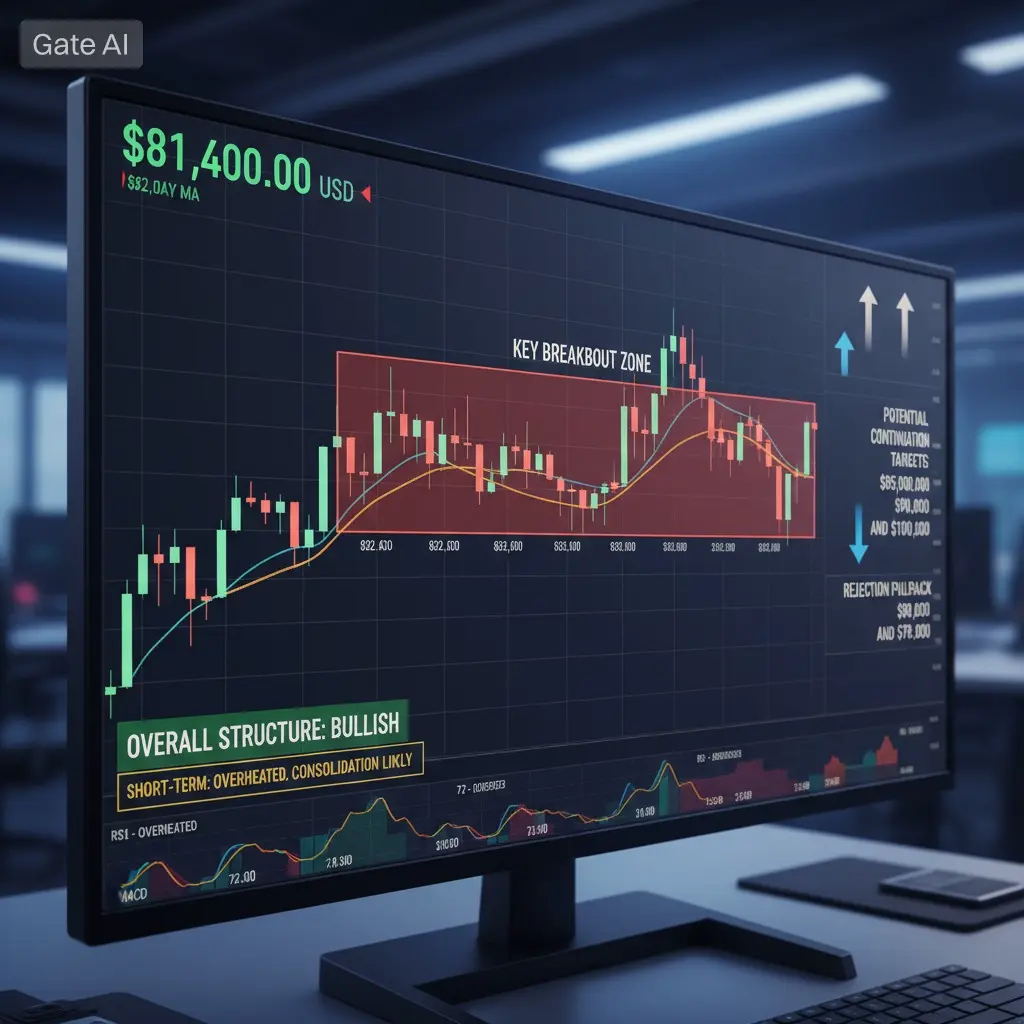
The recent move toward $82,474 represents a liquidity breakout attempt from a multi-week compression range, followed by a controlled pullback toward the $81.4K region. This type of price action is typically associated with early expansion phases in macro bull cycles, where volatility increases but trend direction is not yet fully confirmed.
Current BTC Market Snapshot (May 2026)
Current Price: ~$81,400
24h High: $82,474 (key breakout attempt zone)
24h Low: $80,278
24h Change: +0.89%
7-Day Performance: +0.57%
30-Day Performance: +15.07%
90-Day Performance: +21.3%
Market Cap: ~$1.63 Trillion
BTC is currently trading just below a critical technical confluence zone at $82K–$82.7K, where multiple structural indicators intersect.
WHY $82K–$82.7K IS THE MOST IMPORTANT ZONE IN THE ENTIRE MARKET STRUCTURE
This range is not random resistance — it is a multi-factor decision cluster.
1. Multi-Week Range Breakout Boundary
Bitcoin was previously compressed between $78K–$80K, forming a liquidity coil.
Breakouts from such zones typically trigger:
Stop-loss cascades above resistance
Forced short liquidation
Volatility expansion phases
Trend continuation acceleration
This is not breakout “noise” — it is market structure expansion.
2. 200-Day Moving Average Confluence (~$82,700)
The 200-day moving average is widely used by:
Institutional funds
Algorithmic trading systems
Macro hedge funds
A sustained move above this level historically signals:
Transition into bullish continuation phase
Increased long-term capital inflows
Reduction in downside volatility regime
A rejection below this level often leads to:
Range-bound consolidation
Short-term correction cycles
Reduced leverage exposure from institutions
3. Derivatives Liquidation Trigger Zone
Recent price action caused:
Short liquidations exceeding ~$50M in under an hour
Forced buy pressure during breakout wick
Increase in open interest volatility
This confirms the move was not purely spot-driven — it was leverage-driven expansion, a key signature of early breakout phases.
TECHNICAL STRUCTURE ANALYSIS
Bullish Structure Confirmation
Moving averages aligned bullishly (short > mid > long trend alignment)
Higher lows still intact across daily structure
Strong ADX trend strength indicates real momentum, not fake pump
Volume expansion confirms participation from larger capital pools
Breakout above multi-week consolidation range
Interpretation:
The market is in a bull trend continuation phase, not reversal.
Short-Term Overextension Signals
Despite bullish structure, short-term exhaustion is visible:
Momentum oscillators showing overbought conditions
Rejection wicks near $82.7K resistance
Short-term deviation below MA20
Increased intraday volatility spikes
Interpretation:
This is a healthy cooling phase inside an active uptrend, not trend failure.
MARKET PSYCHOLOGY & SENTIMENT STRUCTURE
Bull Case Psychology
ETF inflows remain steady
Long-term investors view dips as accumulation
Psychological target shifting toward $100K
Confidence in macro liquidity expansion
Neutral / Strategic Traders
Waiting for confirmed close above $82.7K
Prefer pullback entries instead of breakout chasing
Focused on risk-adjusted positioning
Bear Case Narrative
Overbought conditions = potential rejection
Fake breakout concerns remain
Macro uncertainty (rates/liquidity shifts)
📌 Reality Check:
Institutional behavior suggests:
Accumulation is happening during volatility, not during hype.
Retail positioning remains comparatively underexposed.
KEY MARKET LEVELS (STRUCTURAL MAP)
Resistance Zones
$82,700 → 200DMA / breakout confirmation
$84,000–$85,000 → first extension target
$88,500 → momentum acceleration zone
$92,000 → macro resistance cluster
$100,000 → psychological liquidity magnet
Support Zones
$80,278 → immediate support
$78,000 → structural demand zone
$75,000 → accumulation region
$73,000 → institutional buy interest
$70,000 → macro correction floor
NEXT MARKET SCENARIOS (STRUCTURED PROBABILITY MODEL)
Scenario 1: Bullish Expansion (High Probability if $82.7K Breaks)
If BTC closes above $82,700 with strong volume confirmation:
$84K → short-term continuation
$85K → breakout extension
$88.5K → momentum acceleration
$92K → structural resistance test
$100K → macro psychological target
Catalysts:
Short squeeze continuation
ETF inflow acceleration
Derivatives repositioning
Retail FOMO re-entry phase
Scenario 2: Rejection & Retest
If resistance holds:
$80K → initial support
$78K → structural retest
$75K → deeper liquidity sweep
$73K → institutional accumulation zone
Interpretation:
This would still represent a bull market correction, not reversal.
Scenario 3: Sideways Consolidation (Most Likely Short-Term)
BTC may consolidate:
Range: $80K – $82.7K
Duration: 2–6 days
Purpose: momentum reset
This phase allows:
Cooling of overbought indicators
Re-accumulation of leveraged positions
Preparation for next expansion leg
ON-CHAIN + INSTITUTIONAL FLOW INSIGHTS
4. Exchange Flow Behavior
Reduced BTC inflows to exchanges
Indicates holding behavior (lower sell pressure)
5. Long-Term Holder Activity
Dormant supply remains largely inactive
Strong conviction holding pattern
6. ETF Flow Dynamics
Continued net inflows into spot exposure products
Suggests structured institutional demand
7. Derivatives Positioning
High leverage clusters above $82K
Liquidation pockets fueling volatility spikes
Market vulnerable to squeeze-driven moves
STRATEGIC TRADING ROADMAP
1. Breakout Strategy (Aggressive)
Entry: Daily close above $82.7K
Target: $85K → $92K → $100K
Stop-loss: below $80K
Risk: Moderate to High volatility exposure
2. Accumulation Strategy (Low Risk)
Buy zone: $78K–$80K
Strong accumulation: $75K
Focus: long-term positioning
Risk: Lower, higher reward asymmetry
3. Short-Term Trading Strategy
Avoid chasing breakout candles
Focus on pullbacks only
Use tight stop-loss levels
Prefer range trading until breakout confirmation
4. Risk Management Framework
Maximum risk per trade: 2–5%
Avoid excessive leverage (>5x discouraged)
Protect capital during volatility spikes
Prioritize survival over aggression
MARKET REALITY SUMMARY
Trend structure: Bullish
Short-term condition: Overheated but healthy
Institutional flow: Gradual accumulation
Retail positioning: Underexposed
Volatility: Increasing
Market phase: Breakout decision zone
FINAL STRATEGIC CONCLUSION
Bitcoin is currently positioned at a macro inflection point, where short-term rejection or breakout will define the next major directional wave.
Key takeaway:
Above $82,700 → acceleration toward $90K–$100K zone
Below $80K → controlled cooling phase before retry
Overall structure → still strongly bullish macro trend
The most important dynamic is not price alone — but liquidity behavior, institutional accumulation patterns, and leverage positioning across derivatives markets.
The next decisive move from this zone is likely to shape the entire Q2–Q3 2026 crypto trend structure.
repost-content-media
  • Reward
  • 1
  • Repost
  • Share
Yusfirah:
LFG 🔥
#TrumpVisitsChinaMay13
Trump–Xi Summit 2026
INTRODUCTION — GLOBAL MACRO TRIGGER EVENT WITH DIRECT PRICE IMPACT
The Trump–Xi summit is being priced by global markets as a high-volatility macro catalyst because it directly influences global trade flows, inflation expectations, energy pricing, and institutional risk appetite. The most important point is that markets are not waiting for outcomes; instead, they are actively positioning for multiple possible scenarios, which is increasing volatility across crypto, equities, commodities, and forex simultaneously. Bitcoin and the broader crypto mark
BTC0.16%
ETH0.26%
HighAmbition
#TrumpVisitsChinaMay13
Trump–Xi Summit 2026
INTRODUCTION — GLOBAL MACRO TRIGGER EVENT WITH DIRECT PRICE IMPACT
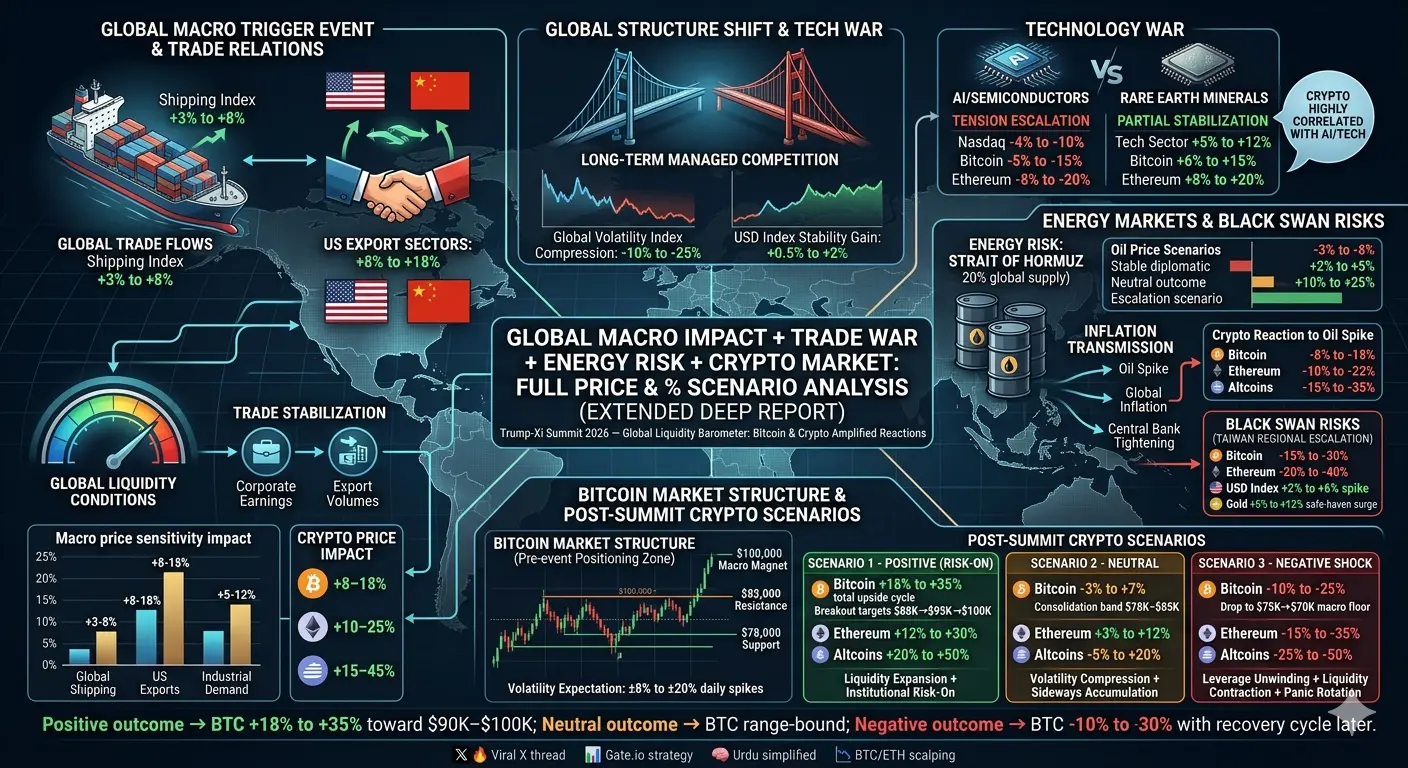
The Trump–Xi summit is being priced by global markets as a high-volatility macro catalyst because it directly influences global trade flows, inflation expectations, energy pricing, and institutional risk appetite. The most important point is that markets are not waiting for outcomes; instead, they are actively positioning for multiple possible scenarios, which is increasing volatility across crypto, equities, commodities, and forex simultaneously. Bitcoin and the broader crypto market are acting as a global liquidity barometer, meaning price reactions are expected to be amplified compared to normal geopolitical events.
TRADE RELATIONS — DIRECT IMPACT ON GLOBAL LIQUIDITY & RISK ASSETS
At the core of negotiations is the stabilization of US–China trade relations after years of tariff pressure and supply chain disruption. Even partial progress in this area has a strong impact on global liquidity conditions because trade flows directly influence corporate earnings expectations, export volumes, and shipping activity across global markets.
If China increases agricultural imports such as soybeans, beef, and poultry, and if large industrial agreements such as aviation purchases are confirmed or even hinted, the impact on global markets would be immediate. Export-driven sectors in the US would benefit, while global logistics and shipping demand would increase, improving macro sentiment.
Macro price sensitivity impact:
Global shipping & trade index: +3% to +8%
US export sectors: +8% to +18%
Industrial demand confidence: +5% to +12%
Crypto price impact (liquidity transmission effect):
Bitcoin: +8% to +18% short-term upside
Ethereum: +10% to +25% upside
Altcoins: +15% to +45% (high beta expansion phase)
GLOBAL STRUCTURE SHIFT — MANAGED COMPETITION ECONOMY
The summit reflects a transition into a long-term managed competition framework, where both the US and China aim to avoid full economic decoupling while still maintaining strategic rivalry. This structure is important for markets because it reduces extreme uncertainty while keeping moderate geopolitical tension intact.
Market volatility effect:
Global volatility index compression: -10% to -25%
USD index stability gain: +0.5% to +2%
Equity risk premium reduction: moderate bullish bias
Crypto implication: Lower uncertainty = higher liquidity tolerance = stronger risk-on flows
TECHNOLOGY WAR — SEMICONDUCTORS, AI, AND RARE EARTH DOMINANCE
The technology conflict remains one of the strongest drivers of medium-term market volatility. The US continues restricting advanced semiconductor exports, particularly AI-related chips, while China retains strategic leverage through rare earth minerals, which are essential for EVs, defense systems, and electronics manufacturing.
If tensions escalate in tech sector:
Nasdaq: -4% to -10%
Bitcoin: -5% to -15%
Ethereum: -8% to -20%
Altcoins: -15% to -40%
If partial stabilization or compromise signals emerge:
Tech sector: +5% to +12%
Bitcoin: +6% to +15%
Ethereum: +8% to +20%
Altcoins: +12% to +35%
Key insight: Crypto is now highly correlated with AI/tech sentiment cycles.
ENERGY MARKETS — INFLATION SHOCK MULTIPLIER EFFECT
Energy markets remain one of the most critical transmission channels between geopolitics and crypto pricing. The Strait of Hormuz remains a key risk factor, as it handles nearly 20% of global oil supply.
Oil price scenarios:
Stable diplomatic outcome: -3% to -8% oil correction
Neutral outcome: +2% to +5% fluctuation range
Escalation scenario: +10% to +25% oil spike
Inflation transmission effect:
Oil spike → global inflation expectation: +0.3% to +1.2% increase
Central bank tightening expectation: high probability rise
Crypto reaction to oil spike:
Bitcoin: -8% to -18% correction risk
Ethereum: -10% to -22%
Altcoins: -15% to -35%
If oil stabilizes:
Crypto rebound potential: +5% to +12% recovery wave
BLACK SWAN RISKS — TAIWAN & REGIONAL ESCALATION SCENARIO
Taiwan remains the highest-impact geopolitical tail risk in global markets.
If escalation occurs (low probability but high impact):
Bitcoin: -15% to -30% flash correction
Ethereum: -20% to -40%
Altcoins: -25% to -50% liquidation wave
USD index: +2% to +6% spike
Gold: +5% to +12% safe-haven surge
Market behavior: rapid deleveraging followed by stabilization phase after panic absorption.
BITCOIN MARKET STRUCTURE — PRE-EVENT POSITIONING ZONE
Bitcoin is currently in a macro bullish structure with short-term consolidation behavior, trading within a key liquidity zone where both upside breakout and downside liquidation risks are active simultaneously.
Current structural range:
Support zone: $78,000 – $80,000
Resistance zone: $82,000 – $86,000
Breakout extension zone: $90,000 – $100,000 potential macro magnet level
Volatility expectation:
Pre-event swing range: ±8% to ±20% daily volatility spikes possible
Derivatives leverage risk zone: high liquidation sensitivity above $82K–$85K
POST-SUMMIT CRYPTO SCENARIOS — FULL PRICE & % BREAKDOWN
SCENARIO 1 — POSITIVE OUTCOME (RISK-ON EXPANSION PHASE)
If trade stabilizes, tech tensions ease, and energy risks decline:
Bitcoin:
Immediate move: +8% to +18%
Extended rally potential: +18% to +35% total upside cycle extension
Breakout targets: $88K → $95K → $100K
Ethereum:
+12% to +30% upside potential
Stronger momentum due to DeFi + staking flows
Altcoins:
+20% to +50% explosive rally zone
High-beta coins may outperform significantly
Market condition: Liquidity expansion + institutional risk-on rotation
⚪ SCENARIO 2 — NEUTRAL OUTCOME (MOST PROBABLE RANGE BOUND PHASE)
If limited agreements only:
Bitcoin:
Range: -3% to +7%
Consolidation band: $78K – $85K
Ethereum:
+3% to +12%
Altcoins:
-5% to +20% mixed performance
Market condition: Volatility compression + sideways accumulation phase
SCENARIO 3 — NEGATIVE SHOCK OUTCOME (RISK-OFF LIQUIDATION PHASE)
If tensions escalate across trade, tech, or energy systems:
Bitcoin:
Drop: -10% to -25%
Extreme downside wick: -30% possible in panic phase
Key support: $75K → $70K macro floor
Ethereum:
-15% to -35% correction risk
Altcoins:
-25% to -50% liquidation wave possible
Market condition: Leverage unwinding + liquidity contraction + panic rotation
INSTITUTIONAL FLOW STRUCTURE — STRONG BUT SENSITIVE
ETF inflows remain positive structural support
Long-term holders remain inactive (strong conviction)
Institutions using volatility dips for accumulation
Derivatives positioning highly leveraged around key zones
Interpretation: Market is structurally bullish but tactically fragile
FINAL MARKET CONCLUSION — GLOBAL REPRICING EVENT
The Trump–Xi summit is a global macro repricing catalyst where trade stability, energy flows, inflation expectations, and tech competition all converge into one synchronized market reaction system.
Final outcome logic:
Positive outcome → BTC +18% to +35% macro continuation toward $90K–$100K zone
⚪ Neutral outcome → BTC range-bound (-3% to +7%) consolidation phase
Negative outcome → BTC -10% to -30% volatility correction with recovery cycle later
repost-content-media
  • Reward
  • Comment
  • Repost
  • Share
#PolymarketDaily
Polymarket’s Trending Prediction — Will Hantavirus Become a 2026 Pandemic?
INTRODUCTION — WHY THIS EVENT IS IN GLOBAL ATTENTION
The recent outbreak of hantavirus on the luxury cruise ship “Hondius” in the South Atlantic has triggered global attention because it combines three sensitive factors: a rare infectious disease, a confined high-density environment (cruise ship), and international travel exposure. As a result, health authorities and prediction markets have both started reassessing the risk of a broader outbreak in 2026.
On Polymarket, a prediction contract titled “2
HighAmbition
#PolymarketDaily
Polymarket’s Trending Prediction — Will Hantavirus Become a 2026 Pandemic?
INTRODUCTION — WHY THIS EVENT IS IN GLOBAL ATTENTION
The recent outbreak of hantavirus on the luxury cruise ship “Hondius” in the South Atlantic has triggered global attention because it combines three sensitive factors: a rare infectious disease, a confined high-density environment (cruise ship), and international travel exposure. As a result, health authorities and prediction markets have both started reassessing the risk of a broader outbreak in 2026.
On Polymarket, a prediction contract titled “2026 Hantavirus Pandemic” has gained significant trading activity, reflecting how financial markets attempt to assign probabilistic pricing to biological risks. As of May 11, 2026, the market-implied probability stands at around 7%, down from approximately 9.7%, indicating that traders have slightly reduced perceived global pandemic risk after updated WHO guidance.
WHAT IS HANTAVIRUS — BIOLOGICAL STRUCTURE & TRANSMISSION
Hantavirus is not a newly discovered pathogen. It has been known since the early 1990s, when it was identified as the cause of severe respiratory illness in the southwestern United States. The disease caused by hantavirus is called Hantavirus Pulmonary Syndrome (HPS), which can lead to severe respiratory failure in infected individuals.
The virus primarily exists in rodents, especially deer mice and related species. Humans become infected mainly through exposure to contaminated rodent droppings, urine, or saliva. Unlike airborne viruses such as influenza or COVID-19, hantavirus does not naturally spread easily through respiratory droplets between humans.
However, one exception exists: the Andes virus strain, found in parts of South America, has shown limited human-to-human transmission under very specific conditions such as prolonged close contact. This characteristic is important but still extremely restricted compared to highly contagious respiratory viruses.
KEY SCIENTIFIC DIFFERENCE — WHY IT IS NOT LIKE COVID-19
The fundamental reason global health organizations consider hantavirus low pandemic risk is its transmission limitation structure.
COVID-19 spreads efficiently through airborne particles, allowing rapid global transmission even from asymptomatic individuals. In contrast, hantavirus requires either environmental exposure or very close prolonged contact in rare cases.
According to WHO assessments, including statements from epidemic preparedness experts, hantavirus does not possess the transmission efficiency required to sustain global pandemic-level spread. Even in outbreaks where human-to-human transmission occurred (such as Andes virus clusters), the spread remained localized and did not evolve into sustained community transmission.
This biological limitation is the core reason the probability on prediction markets remains relatively low despite high fatality rates in individual cases.
CURRENT OUTBREAK STATUS — 2026 HONDIUS CRUISE INCIDENT
The Hondius cruise ship outbreak has reported:
8 confirmed cases
3 deaths
Approximate 38% case fatality rate
The high fatality rate naturally raises concern, but epidemiologically, severity alone does not determine pandemic potential. Transmission capability is the key variable.
Multiple countries including Germany, the UK, the Netherlands, and Singapore have initiated contact tracing of passengers, but no evidence of uncontrolled community spread has been confirmed.
WHO has classified the overall public risk as low, while noting that the incubation period can extend up to six weeks, meaning additional cases may still emerge.
GLOBAL EPIDEMIOLOGICAL CONTEXT — LATIN AMERICA PATTERN
Argentina and surrounding regions have historically recorded the highest concentration of hantavirus cases. In 2025–2026:
Argentina reported over 100 confirmed cases
Regional cases across the Americas exceeded 200+ infections
Mortality rates remain high in localized outbreaks
However, even in previous severe clusters, such as the 2018–2019 Andes virus outbreak in Argentina, transmission remained limited to close-contact environments and never escalated into widespread community transmission.
This historical precedent is a key reason why global health agencies remain cautious but not alarmed.
ENVIRONMENTAL FACTOR — CLIMATE CHANGE IMPACT
One emerging factor is climate variability. Experts suggest that rising temperatures and ecological shifts may be altering rodent population distribution, increasing human exposure in previously low-risk areas.
This does not increase human-to-human transmissibility, but it does increase the frequency of spillover events, meaning more isolated infections may occur in different regions over time.
In simple terms:
More exposure risk ≠ higher pandemic risk
It increases case numbers but not transmission efficiency
POLYMARKET PROBABILITY — HOW THE 7% IS FORMED
The 7% probability assigned by Polymarket is not a medical conclusion but a financial aggregation of trader sentiment and risk pricing.
Prediction markets function by:
Allowing traders to buy “Yes” or “No” contracts
Pricing outcomes based on capital flow
Converting collective expectations into probability numbers
The drop from 9.7% → 7% reflects increased confidence in WHO statements that classify the public risk as low. However, the fact that it is not near 0% indicates that traders still assign a small premium to uncertainty, particularly due to:
High fatality rate in localized outbreaks
Limited but non-zero human transmission potential
Unknown mutation scenarios over time
MARKET INTERPRETATION — WHAT INVESTORS ARE REALLY PRICING
The market is not predicting a guaranteed pandemic. Instead, it is pricing tail-risk uncertainty, meaning:
Base case: no global pandemic
Risk case: localized outbreaks continue
Extreme case: rare mutation leads to wider transmission
The 7% value represents a probability-weighted fear premium, not a scientific forecast.
RISK SCENARIO ANALYSIS
LOW-RISK BASE CASE (MOST LIKELY)
Localized outbreaks only
No sustained human transmission
Contained by health authorities
Probability: ~85%+ implicit market expectation
MODERATE RISK CASE
Multiple regional clusters
Increased rodent exposure events
Occasional human-to-human transmission
Probability: ~8%–10%
HIGH-RISK PANDEMIC CASE (CURRENT 7% MARKET PRICING)
Mutation increases transmissibility
Cross-border sustained spread
WHO pandemic classification trigger
Probability: ~5%–7%
FINAL CONCLUSION — WHY MARKETS STILL SHOW LOW PANDEMIC RISK
Despite alarming headlines, scientific and historical evidence strongly suggests that hantavirus lacks the transmission mechanics required for a global pandemic. The virus is highly lethal in isolated cases but fundamentally weak in sustained human-to-human spread.
The Polymarket pricing reflects this balance:
High severity → increases fear premium
Low transmissibility → keeps probability low
Final takeaway:
The 7% probability is not a warning of an incoming pandemic, but rather a market-quantified expression of uncertainty around a rare but severe zoonotic virus.
repost-content-media
  • Reward
  • Comment
  • Repost
  • Share
#BitcoinSpotVolumeNewLow
BITCOIN SPOT VOLUME COLLAPSE — THE SILENT LIQUIDITY FREEZE THAT MOST TRADERS ARE MISREADING
We are currently not inside a hype phase, not inside a panic phase, and not even inside a normal consolidation phase.
We are inside something far more important and far more dangerous for unprepared traders: a structural liquidity contraction phase where market participation is quietly disappearing while price action continues to create an illusion of stability.
This is exactly the kind of environment that looks boring on the surface but becomes violently directional when liqui
BTC0.16%
  • Reward
  • 2
  • Repost
  • Share
discovery:
To The Moon 🌕
View More
#WCTCTradingKingPK 📌
WCTC trading community event on Gate Square.
It generally represents:
WCTC → World Trading Competition / Challenge (season-based trading event)
Trading King → Traders competing to show skill, profit, and strategy excellence
PK → Pakistan community participation or regional tagging
👉 In simple words, it means:
“Pakistan traders participating in WCTC competition to prove trading skills and win rewards.”
It is mainly used to:
Share trading results
Post strategies
Join competition activities
Earn rewards through engagement and performance
Build visibility in the trading com
GT0.53%
  • Reward
  • 2
  • Repost
  • Share
discovery:
To The Moon 🌕
View More
#WCTCTradingKingPK 📌
WCTC trading community event on Gate Square.
It generally represents:
WCTC → World Trading Competition / Challenge (season-based trading event)
Trading King → Traders competing to show skill, profit, and strategy excellence
PK → Pakistan community participation or regional tagging
👉 In simple words, it means:
“Pakistan traders participating in WCTC competition to prove trading skills and win rewards.”
It is mainly used to:
Share trading results
Post strategies
Join competition activities
Earn rewards through engagement and performance
Build visibility in the trading com
GT0.53%
  • Reward
  • 2
  • Repost
  • Share
discovery:
To The Moon 🌕
View More
  • Reward
  • Comment
  • Repost
  • Share
#TreasuryYieldBreaks5PercentCryptoUnderPressure
The Rise of U.S. Treasury Yields Above 5% and Its Structural Impact on Crypto Markets
Macro Shift: A New Financial Gravity Above 5%
The move of U.S. Treasury yields above the 5 percent level marks a powerful macro reset that is influencing every major asset class, and its impact on crypto is both immediate and structural. With the 10-year yield near 4.35 to 4.40 percent and long-duration yields testing or exceeding 5 percent, global capital is rotating toward safer, predictable returns. This creates a strong competing force against crypto, forci
BTC0.16%
ETH0.26%
HighAmbition
#TreasuryYieldBreaks5PercentCryptoUnderPressure
The Rise of U.S. Treasury Yields Above 5% and Its Structural Impact on Crypto Markets
Macro Shift: A New Financial Gravity Above 5%
The move of U.S. Treasury yields above the 5 percent level marks a powerful macro reset that is influencing every major asset class, and its impact on crypto is both immediate and structural. With the 10-year yield near 4.35 to 4.40 percent and long-duration yields testing or exceeding 5 percent, global capital is rotating toward safer, predictable returns. This creates a strong competing force against crypto, forcing investors to rethink risk exposure, capital allocation, and timing.
Risk-Free Return vs Crypto Performance Pressure
At yields above 5 percent, investors can now secure stable returns without volatility, which raises the benchmark for crypto. Bitcoin and Ethereum must now deliver returns significantly above 5 percent to justify their risk. This has slowed aggressive inflows and shifted the market from fast expansion to controlled consolidation. Crypto is no longer the only attractive option; it is now one of several competing opportunities.
Bitcoin Price Structure, Percentages, and Forecast
Bitcoin is trading around 78000 to 78500 dollars, showing small daily moves near plus 0.1 percent to plus 0.3 percent, while still holding a strong recovery of nearly plus 30 percent from the 60000 level earlier in 2026. Despite this strength, BTC is facing resistance due to macro pressure.
Short-term range remains between 72000 and 85000 dollars, which reflects a downside risk of around minus 8 percent to minus 10 percent and upside potential of plus 8 percent to plus 10 percent in the current environment. If yields decline, Bitcoin could break out with a rally of plus 15 percent to plus 22 percent toward 90000 to 95000. If yields stay high, corrections of minus 10 percent to minus 15 percent are possible due to liquidity constraints.
Ethereum Sensitivity, Growth Pressure, and Forecast
Ethereum is trading near 2300 to 2310 dollars, with daily movement around plus 0.2 percent, but it remains weaker compared to Bitcoin due to its dependence on future growth and ecosystem expansion.
ETH is expected to trade between 2000 and 2700 dollars, with downside risk of minus 12 percent to minus 15 percent and upside potential of plus 15 percent to plus 18 percent. In a favorable macro shift, Ethereum could outperform Bitcoin, delivering rallies of plus 25 percent to plus 40 percent, while in a high-yield environment it may continue to lag due to discounted future value.
Liquidity Drain and Market Compression
Rising yields absorb liquidity from global markets, pulling capital into bonds and reducing the flow into crypto. This results in weaker trading conditions where:
Trading volume can decline by 10 percent to 25 percent
Rallies often stay limited within plus 5 percent to plus 10 percent
Corrections frequently occur between minus 5 percent to minus 12 percent
The market becomes range-bound, slower, and more technical rather than emotional or hype-driven.
Institutional Rotation and ETF Sensitivity
Institutional investors are reallocating capital toward fixed income due to attractive yields. Bitcoin ETF inflows remain positive but become highly sensitive to yield changes. A rise in yields can slow inflows by 20 percent to 40 percent, while a decline can trigger strong capital re-entry and fuel rallies.
Psychological Shift: Stability vs Risk Appetite
Yields above 5 percent signal safety and discipline, attracting conservative investors. Crypto represents growth and risk, so in tight macro conditions, investors reduce aggressive exposure and shift toward gradual accumulation. This extends consolidation phases but strengthens long-term structure.
Trading Strategy, Plans, and Practical Tips for Traders
In this environment, traders must adapt their approach because the market is no longer in a fast bullish expansion phase but in a controlled, macro-driven range.
First, range trading becomes one of the most effective strategies. Instead of chasing breakouts, traders should focus on buying near support levels such as 72000 to 74000 for Bitcoin and 2000 to 2100 for Ethereum, while taking profits near resistance zones like 82000 to 85000 for BTC and 2500 to 2700 for ETH. This approach aligns with the current sideways structure.
Second, risk management becomes critical. With increased macro uncertainty, traders should avoid over-leverage and maintain stop losses within 5 percent to 8 percent ranges depending on position size. Capital preservation is more important than aggressive profit chasing in this phase.
Third, traders should closely monitor Treasury yield movements and macro data such as inflation and Federal Reserve signals. A sudden drop in yields can act as a trigger for breakout trades, where momentum strategies become more effective. In that case, traders can shift from range trading to trend-following strategies.
Fourth, position sizing should remain conservative. Instead of allocating full capital at once, traders should use a scaling approach, entering positions in parts to reduce risk and improve average entry price.
Fifth, patience is a key advantage. Many traders lose money in consolidation phases by overtrading. The current environment rewards disciplined traders who wait for high-probability setups rather than reacting to every small movement.
Sixth, diversification within crypto can help balance risk. While Bitcoin remains relatively stable, selective exposure to Ethereum and strong altcoins can provide additional upside when momentum returns, but allocations should remain controlled.
Short-Term Pressure vs Long-Term Opportunity
While Treasury yields dominate in the short term, their returns are fixed, whereas crypto has unlimited upside potential. Bitcoin and Ethereum remain structurally strong, and their long-term growth potential still exceeds traditional assets.
Future Catalyst: Yield Reversal and Market Expansion
The biggest trigger for the next major crypto rally will be a decline in Treasury yields. If yields move from 5 percent toward 4 percent or lower, liquidity will return, and capital will rotate back into risk assets.
Bitcoin could rally plus 20 percent to plus 40 percent
Ethereum could surge plus 30 percent to plus 60 percent
Altcoins could expand even further beyond plus 80 percent
Conclusion: A Controlled Market Preparing for Expansion
The rise of Treasury yields above 5 percent is creating pressure but also discipline in the crypto market. Bitcoin near 78000 and Ethereum near 2300 are holding steady within defined ranges, reflecting a balance between macro resistance and long-term strength.
For traders, this is not a phase to chase hype but a phase to trade smart, manage risk, and prepare for the next breakout. The market is not weak, it is building a foundation, and when macro conditions shift, the next move is likely to be powerful and fast.
repost-content-media
  • Reward
  • Comment
  • Repost
  • Share
#OilBreaks110 .
The Recent Surge in Global Oil Prices Above $110:
The global oil market has entered a highly sensitive and structurally tight phase, with Brent crude consistently trading in the $108–$116 per barrel range, reflecting one of the strongest macro-driven rallies in recent years. This is not a simple supply-demand imbalance — it is a multi-layered geopolitical, financial, and macro liquidity event that is now actively influencing inflation, central bank policy, equities, and even crypto markets.
We are effectively witnessing oil re-emerge as the dominant global macro variable of 20
BTC0.16%
ETH0.26%
HighAmbition
#OilBreaks110 .
The Recent Surge in Global Oil Prices Above $110:
The global oil market has entered a highly sensitive and structurally tight phase, with Brent crude consistently trading in the $108–$116 per barrel range, reflecting one of the strongest macro-driven rallies in recent years. This is not a simple supply-demand imbalance — it is a multi-layered geopolitical, financial, and macro liquidity event that is now actively influencing inflation, central bank policy, equities, and even crypto markets.
We are effectively witnessing oil re-emerge as the dominant global macro variable of 2026.
1. Structural Core of the Rally: Why Oil Is Sustaining Above $110
A) OPEC+ Controlled Supply Compression
OPEC+ continues to enforce disciplined production cuts, estimated at 1–2 million barrels per day, creating an artificial scarcity layer in the global market.
Key implications:
Spare capacity is historically low
Output flexibility is reduced
Any shock immediately reflects in price spikes
This is not just policy — it is strategic price management.
B) Geopolitical Risk Premium Explosion
A major structural driver is the embedded geopolitical risk premium centered around key maritime chokepoints, especially:
Strait of Hormuz
This single corridor handles ~20–25% of global seaborne oil flows (~20 million barrels/day).
Even without physical disruption, markets price in:
Insurance premium spikes
Freight cost inflation
Supply delay risk
Military escalation probability
Iran’s Strategic Role
Iran remains a central variable due to:
Regional influence
Leverage over shipping routes
Ability to escalate or de-escalate tensions quickly
Result: markets continuously price a “fear buffer” of $8–$15 per barrel into oil.
C) Structural Underinvestment Shock
For nearly a decade:
Upstream oil exploration investment has been underfunded
ESG pressure slowed fossil fuel expansion
New supply pipelines are limited and delayed
This created a long-term constraint:
Demand rebounds faster than supply can respond.
D) Demand Resilience from Asia
China and India remain core consumption engines
Combined demand growth: ~3–5% annually
Industrial + transport fuel demand remains sticky
Even with global slowdown fears, oil demand refuses to collapse.
E) Financialization of Oil Markets
Oil is no longer purely physical — it is heavily driven by:
Hedge fund positioning
Algorithmic momentum trading
Macro hedge allocations
This creates:
Overshooting rallies
Faster sentiment shifts
Strong trend persistence
2. Macro Economic Transmission Effects
Inflation Shock Channel
Oil above $110 directly feeds:
Transportation costs
Food logistics
Industrial input pricing
Estimated macro effect:
+1% to +3% headline inflation impact globally
Delayed disinflation in developed economies
Central Bank Pressure Loop
Higher oil leads to:
Sticky inflation expectations
Delayed interest rate cuts
“Higher for longer” narrative reinforcement
This creates a feedback loop:
Oil ↑ → Inflation ↑ → Rates ↑ → Liquidity ↓
GDP Growth Drag
Global GDP drag: 0.5%–1%
Emerging markets more vulnerable due to import dependency
3. Cross-Asset Impact: Equities, Crypto, and Risk Markets
A) Equity Market Reaction
Energy sector: strong outperformance (+20–50%)
Airlines & transport: margin compression
Tech: valuation pressure via higher discount rates
₿ B) Crypto Market Sensitivity
Bitcoin ($78K) and Ethereum ($2.3K equivalent regionally referenced pricing) are reacting through liquidity channels:
Negative short-term effects:
Strong USD environment
Tighter liquidity conditions
Risk-off rotation
Medium-term narrative:
Inflation hedge positioning
Scarcity asset comparison strengthens
Crypto behaves less like oil hedge, more like liquidity beta asset in the short term.
4. Market Psychology (“Trader Layer” Reality)
Current sentiment among professional traders is best described as:
“Bullish structurally, paranoid tactically”
Common desk-level thinking:
“Trend is real, but geopolitics can flip it overnight.”
“Oil can hit $130 fast, but collapse just as quickly.”
“Volatility is the real product now.”
Key behavioral shifts:
Reduced leverage usage
Increased options trading
Preference for hedged exposure
5. Advanced Trading Framework (Professional Layer)
A) Geopolitical Trend Riding Strategy
Trade momentum with news confirmation
Use trailing stops (2–4%)
Avoid holding full exposure over weekend geopolitical risk windows
B) Volatility Extraction Strategy
Use straddles / strangles around:
OPEC meetings
Middle East developments
Inventory reports
Core idea:
Profit from movement, not direction.
C) Spread-Based Risk Reduction
Calendar spreads to capture time decay efficiency
Crack spreads to benefit refining margins
Inter-market spreads (Brent vs WTI divergence)
D) Portfolio Hedging Layer
For equities/crypto investors:
5–15% exposure to energy assets as inflation hedge
Partial hedge using inverse volatility exposure
Reduce beta exposure during spikes
E) Inventory & Data Monitoring System
Key indicators:
EIA / API weekly inventories
Shipping tanker tracking data
Asian import demand flows
USD index strength correlation
6. Scenario Modeling (Critical for Decision Making)
Bull Case (Escalation Cycle)
Triggers:
Hormuz disruption risk escalation
Iran geopolitical escalation
OPEC+ deeper cuts
Outcome:
$120 → $130+ oil
Energy equities outperform
Inflation spike continuation
Base Case (Controlled Tension)
Managed geopolitical friction
Stable OPEC+ discipline
No major supply disruption
Outcome:
Range-bound $100–$115
High volatility but no breakout trend
Bear Case (De-escalation Shock)
Triggers:
Diplomatic resolution
Demand slowdown signals
OPEC+ output increase
Outcome:
Fast drop to $85–$95
Short-term equity relief rally
Energy sector correction
7. Strategic Conclusion: What This Market Really Represents
The current oil surge is not just an energy cycle — it is a global macro stress test combining:
Geopolitical fragility
Supply chain rigidity
Inflation re-acceleration risk
Liquidity tightening dynamics
Oil is now acting as:
A real-time barometer of global risk sentiment.
Final Trading Mindset Summary
This is not a prediction market — it is a reaction market
Survival depends more on risk control than direction
Volatility is permanent, not temporary
Flexibility beats conviction
repost-content-media
  • Reward
  • Comment
  • Repost
  • Share
#BitcoinSpotVolumeNewLow
Bitcoin Spot Trading Volume at Multi-Year Lows
The global Bitcoin market is currently undergoing a deep liquidity contraction phase, where spot trading volume has collapsed to multi-year lows, signaling not just reduced activity but a structural pause in risk-taking behavior across both retail and institutional participants. This is one of the most important silent phases in crypto cycles—where price may appear stable on the surface, but underlying market participation is significantly weakened, creating conditions for either explosive future expansion or prolonged s
BTC0.16%
HighAmbition
#BitcoinSpotVolumeNewLow
Bitcoin Spot Trading Volume at Multi-Year Lows
The global Bitcoin market is currently undergoing a deep liquidity contraction phase, where spot trading volume has collapsed to multi-year lows, signaling not just reduced activity but a structural pause in risk-taking behavior across both retail and institutional participants. This is one of the most important silent phases in crypto cycles—where price may appear stable on the surface, but underlying market participation is significantly weakened, creating conditions for either explosive future expansion or prolonged sideways compression depending on macro triggers.
At present, Bitcoin spot activity has dropped sharply across major exchanges, with daily volumes reportedly falling below the $8B–$10B range in recent observations, compared to significantly higher activity during prior momentum phases. This decline reflects a market where coins are not actively changing hands, and conviction trading has been replaced by waiting behavior, capital preservation, and macro-driven hesitation.
1. Macro Shock Layer — Geopolitics, Iran Tensions, and Global Risk Aversion
One of the strongest external forces shaping this environment is escalating geopolitical uncertainty, particularly involving Iran-related tensions and broader Middle Eastern instability risks, which directly influence global energy markets and liquidity flows.
When geopolitical stress rises:
Oil prices surge → inflation expectations increase
Global shipping and supply chains tighten
Risk assets face capital withdrawal
Investors move toward USD, bonds, and cash equivalents
Oil trading near elevated zones around $110–$115 per barrel in recent spikes has intensified inflation fears and reduced speculative appetite across crypto markets. This environment does not directly “kill” Bitcoin demand, but it reduces aggressive spot participation, causing liquidity to dry up.
Result:
Spot volume down 35%–55% vs mid-cycle averages
Order books thinning across exchanges
Increased slippage in medium trades
2. CPI Inflation Dynamics — Uncertainty Keeps Capital Frozen
CPI data remains one of the most powerful macro triggers for Bitcoin. The issue is not just inflation itself—it is uncertainty about inflation persistence.
If CPI:
Comes higher than expected → risk assets sell off
Comes mixed → volatility increases but conviction stays low
Comes lower → still requires Fed confirmation before rallying
This leads to a psychological effect in markets: 👉 Traders stop committing large spot positions
👉 Liquidity gets parked in stablecoins or short-term yield instruments
👉 Market becomes reactive instead of directional
Impact on Bitcoin:
Spot participation down 20%–40% from pre-CPI uncertainty phases
Volatility becomes headline-driven instead of flow-driven
3. Federal Reserve Policy Delay — Liquidity Vacuum Effect
The expectation of Fed rate cuts has been repeatedly pushed forward, creating a prolonged liquidity vacuum environment.
When rates remain high:
USD stays strong
Risk appetite weakens
Capital rotates out of speculative assets
Bitcoin historically performs best during liquidity expansion cycles—but currently:
Policy is uncertain, delayed, and data-dependent
No clear easing cycle confirmation exists
Market effect:
Spot inflows reduced by ~30%–50% vs easing expectations periods
Institutional hesitation increases
Price momentum weakens even during bullish news
4. Retail Exhaustion — The Silent Volume Collapse Engine
Retail participation has structurally declined due to repeated cycle fatigue.
Reasons:
Multiple liquidation events in prior cycles
Reduced hype environment compared to earlier bull markets
Shift toward passive holding or stablecoin yield strategies
Higher complexity of trading (derivatives dominance)
Retail-driven impact:
Spot volume contribution down 40%–60% vs previous bull phases
Lower order book depth
More false breakout conditions
This is critical:
👉 Without retail flow, crypto loses its “fuel layer” for volatility expansion.
5. Institutional Behavior — Silent Accumulation Behind Weak Volume
While public spot volume declines, institutional activity tells a different story.
Key trend:
Accumulation via OTC desks
ETF-based exposure (long-term allocation strategies)
Structured derivatives positioning
This creates a paradox: 📉 Visible market volume drops
Hidden long-term holdings increase
Institutional estimate impact:
OTC + ETF accumulation potentially absorbing 20%–35% of circulating liquidity pressure
Reduces downside volatility spikes
Creates “compression before expansion” structure
6. Current Price Structure — Tight Compression Zone
Bitcoin is currently moving in a compressed consolidation range, reflecting liquidity imbalance.
Key structure:
Support: $72,000 – $75,000
Resistance: $80,000 – $83,000
Recent movement characteristics:
Weekly volatility: 2% – 6% range
Breakouts failing without volume confirmation
Price reacting more to macro headlines than internal crypto flows
This is a classic: 👉 “Low volume compression regime”
7. Aggressive Price Scenario Model (Enhanced % Breakdown)
Bullish Liquidity Expansion Scenario
If macro conditions improve (CPI stabilization + geopolitical easing + Fed pivot signals):
Expected upside: +20% to +45%
Target range: $95,000 → $115,000
Volume recovery: +60% to +120% surge in spot activity
Trigger conditions:
Inflation cooling confirmation
Rate cut probability rising
Geopolitical tension reduction
Neutral Compression Scenario (Base Case)
If uncertainty continues without resolution:
Price range: $70,000 – $85,000
Movement: 5% – 12% swings
Volume: remains historically low
This is the “waiting zone” market: 👉 No breakout, no breakdown, only rotation
Bearish Liquidity Drain Scenario
If geopolitical escalation + sticky inflation + strong USD continue:
Downside risk: -10% to -25%
Potential range: $55,000 – $65,000
Panic wick scenario: deeper temporary spikes possible
This occurs if:
Risk-off acceleration returns
Liquidity exits crypto rapidly
ETF inflows slow significantly
8. Strategic Trading Framework (Low Volume Environment)
In this regime, strategy must shift completely:
✔ Range Trading Dominance
Buy near support zones
Sell near resistance zones
Avoid chasing breakouts without volume confirmation
✔ Capital Efficiency Model
Reduce leverage exposure significantly
Use partial entries instead of full positioning
Preserve liquidity for volatility expansion phase
✔ Macro Trigger Awareness
Key events that move this market:
CPI releases
Fed speeches / dot plot updates
Geopolitical escalation headlines
Oil price shocks
✔ Volume Confirmation Rule
No trade unless: 👉 Volume confirms direction
Otherwise → fake breakout probability remains high
9. Risk Management Upgrade (Critical Layer)
Maintain 40%–70% dry capital buffer
Avoid emotional reaction trading
Track spot volume + derivatives open interest together
Respect invalidation levels strictly
Treat low volume rallies as “fragile moves”
10. Final Market Interpretation — What This Really Means
This is not a collapse in Bitcoin demand. It is a liquidity reset phase inside a global macro uncertainty cycle.
Key truth: 👉 Price is stable, but participation is missing
👉 Institutions are accumulating quietly
👉 Retail has stepped back
👉 Macro uncertainty is freezing risk appetite
Historically, these environments often precede:
Strong directional expansion phases
Rapid volume recovery cycles
Aggressive trend formation once clarity returns
Final Insight
Bitcoin is currently in a compressed energy state market structure:
Low volume
High uncertainty
Hidden accumulation
Macro-driven hesitation
When liquidity returns, the move is typically fast, aggressive, and trend-defining.
The key question is not whether Bitcoin moves next—but: 👉 “In which direction will liquidity return first?”
repost-content-media
  • Reward
  • Comment
  • Repost
  • Share
#GateSquareMayTradingShare
HIDDEN GEM ALTCOINS DEBATE: SOLANA (SOL) vs XRP — THE NEXT EXPLOSIVE CRYPTO LEADERSHIP WAR
THE ALTCOIN MARKET IS ENTERING A HIGH-VELOCITY ROTATION PHASE
The crypto market is currently transitioning into a decisive altcoin rotation phase where capital is no longer distributed evenly across all assets, but instead concentrating into a few high-liquidity, high-narrative tokens. This phase is historically known for producing the fastest and most aggressive percentage moves in the entire cycle, as liquidity begins flowing from Bitcoin stability zones into selected altc
SOL1.55%
XRP2.46%
BTC0.16%
HighAmbition
#GateSquareMayTradingShare
HIDDEN GEM ALTCOINS DEBATE: SOLANA (SOL) vs XRP — THE NEXT EXPLOSIVE CRYPTO LEADERSHIP WAR
THE ALTCOIN MARKET IS ENTERING A HIGH-VELOCITY ROTATION PHASE
The crypto market is currently transitioning into a decisive altcoin rotation phase where capital is no longer distributed evenly across all assets, but instead concentrating into a few high-liquidity, high-narrative tokens. This phase is historically known for producing the fastest and most aggressive percentage moves in the entire cycle, as liquidity begins flowing from Bitcoin stability zones into selected altcoins with strong narratives.
At the center of this debate are two major contenders: Solana (SOL) and XRP, both representing completely different structural forces in the market—one driven by technological expansion and ecosystem speed, the other driven by institutional adoption and financial infrastructure integration.
SOLANA (SOL): HIGH-SPEED ECOSYSTEM WITH STRONG MOMENTUM EXPANSION POTENTIAL
Solana is widely recognized as one of the most advanced high-performance Layer-1 blockchains in the crypto industry, designed for ultra-fast execution, extremely low transaction fees, and massive scalability. Its ecosystem has expanded rapidly across DeFi, NFTs, gaming, memecoins, and real-world asset tokenization, making it one of the strongest retail and developer-driven ecosystems in the market.
Current Price: ~$83.88 USD
Solana’s core strength lies in its high-beta behavior, meaning it tends to amplify broader market movements significantly during bullish phases. When liquidity rotates into altcoins, SOL often becomes one of the fastest-moving assets due to strong speculative demand combined with real ecosystem usage.
From a growth perspective, Solana has already demonstrated historical capability for 20%–50%+ rapid expansion phases during strong bullish cycles, especially when volume confirms trend continuation. Its ongoing ecosystem expansion, increasing DEX activity, stablecoin growth, and cross-chain integrations continue to support long-term bullish structure.
However, the key condition for sustained upside remains consistent volume expansion, network stability, and continued developer adoption, rather than short-term speculative spikes.
XRP: INSTITUTIONAL-DRIVEN ASSET WITH LONG ACCUMULATION AND POWERFUL BREAKOUT POTENTIAL
XRP operates under a fundamentally different narrative compared to most altcoins, as its value proposition is deeply tied to global financial infrastructure, cross-border payment systems, and institutional settlement efficiency. It is not purely speculative; instead, it is positioned as a bridge between traditional finance and blockchain-based liquidity systems.
Current Price: ~$1.38 USD
XRP typically follows a long accumulation structure, where price remains compressed for extended periods while market uncertainty, regulatory clarity, and institutional positioning develop in the background. Once these conditions align, XRP has historically demonstrated the ability to deliver sharp breakout expansions in the range of 30%–70%+, especially during late-cycle liquidity surges.
Recent developments such as increasing institutional engagement, improving regulatory clarity in key regions, and interoperability expansion (including cross-chain integrations like wrapped assets on other ecosystems) strengthen XRP’s long-term positioning. However, its price movement is often slower to initiate compared to high-beta assets, but significantly more explosive once momentum activates.
MARKET ROTATION DYNAMICS: WHY SOL AND XRP DOMINATE THIS CYCLE
In every crypto cycle, capital rotation plays a critical role in determining outperformers. Once Bitcoin stabilizes or consolidates after major moves, liquidity typically flows into altcoins that combine strong narratives with either technological innovation or institutional relevance.
Solana represents innovation-driven capital rotation, fueled by ecosystem expansion, developer activity, and retail engagement. XRP represents institutional-driven capital rotation, driven by financial integration, banking systems, and real-world payment utility.
This creates a structural conflict in market positioning: 👉 One side is driven by speed, innovation, and ecosystem growth (SOL)
👉 The other is driven by adoption, regulation, and financial infrastructure (XRP)
VOLATILITY STRUCTURE: HIGH OPPORTUNITY WITH ELEVATED RISK
Both SOL and XRP exist in a high-volatility environment where price can expand or contract rapidly based on liquidity conditions, sentiment shifts, and macroeconomic changes. Unlike Bitcoin, altcoins tend to experience amplified reactions, meaning both upside gains and downside corrections can be significantly sharper.
Key risk factors include:
Global liquidity tightening or expansion
Regulatory developments impacting sentiment
Bitcoin dominance shifts
Ecosystem or network-specific events
Sudden narrative rotations in the market
This makes timing, confirmation, and capital management essential rather than relying purely on directional bias.
MACRO & SENTIMENT FACTORS: THE REAL DRIVER BEHIND THE NEXT MOVE
The next major altcoin expansion phase will likely depend heavily on global macro liquidity conditions, interest rate expectations, risk-on sentiment in financial markets, and Bitcoin’s ability to maintain structural stability.
When liquidity expands and risk appetite increases, altcoins tend to outperform significantly. When liquidity contracts, capital flows back into Bitcoin or stable positions, delaying altcoin breakouts.
FINAL MARKET DEBATE: WHICH ASSET LEADS THE NEXT EXPLOSION?
At this stage, neither Solana nor XRP has confirmed a full-scale breakout structure, meaning the market is still in a positioning and accumulation phase where smart money gradually builds exposure before directional expansion occurs.
Solana scenario: Faster momentum, ecosystem-driven expansion, higher volatility, and strong retail participation potential
XRP scenario: Delayed but powerful institutional breakout potential, driven by financial integration and macro adoption trends
Both assets remain strong contenders, but their timing, speed, and catalyst structure are fundamentally different.
FINAL QUESTION FOR TRADERS
Will Solana’s high-speed ecosystem and aggressive liquidity rotation lead the next altcoin explosion, or will XRP deliver a delayed but institutional-powered breakout that surprises the entire market?
The answer will not come from speculation—it will come from liquidity flow, structural confirmation, and capital rotation behavior across the market.
repost-content-media
  • Reward
  • Comment
  • Repost
  • Share
#GateSquareMayTradingShare
#WCTCTradingKingPK
WHY 90% OF TRADERS LOSE MONEY? — A DEEP REALITY CHECK FOR CRYPTO MARKETS
THIS IS NOT BAD LUCK — IT IS BEHAVIOR, STRATEGY, AND DISCIPLINE FAILURE
The uncomfortable truth about trading, especially in crypto markets, is that the majority of participants lose money not because the market is unfair or manipulated beyond understanding, but because they approach it without structure, discipline, or a clear plan. This “90% losing traders” reality is not a myth; it is a repeating cycle driven by human psychology, poor risk management, and a complete mis
BTC0.16%
SOL1.55%
XRP2.46%
HighAmbition
#GateSquareMayTradingShare
#WCTCTradingKingPK
WHY 90% OF TRADERS LOSE MONEY? — A DEEP REALITY CHECK FOR CRYPTO MARKETS
THIS IS NOT BAD LUCK — IT IS BEHAVIOR, STRATEGY, AND DISCIPLINE FAILURE
The uncomfortable truth about trading, especially in crypto markets, is that the majority of participants lose money not because the market is unfair or manipulated beyond understanding, but because they approach it without structure, discipline, or a clear plan. This “90% losing traders” reality is not a myth; it is a repeating cycle driven by human psychology, poor risk management, and a complete misunderstanding of how markets actually function under liquidity and volatility conditions.
CHASING THE MARKET: THE BIGGEST MISTAKE TRADERS MAKE
One of the most common reasons traders lose money is because they enter trades too late, usually driven by hype, fear of missing out, or social media influence rather than real analysis. When Bitcoin starts moving toward strong psychological zones like $78K–$80K, or when assets like Solana around ~$83.88 or XRP near ~$1.38 begin showing momentum, most traders jump in after the move has already happened, placing themselves in positions where risk is high and upside potential is already reduced.
This behavior creates a pattern where traders consistently buy near local highs and sell near local lows, effectively doing the opposite of what successful trading requires.
POOR RISK MANAGEMENT: THE SILENT ACCOUNT KILLER
Another major factor behind consistent losses is the complete lack of risk control. Many traders enter positions without defining how much they are willing to lose, use excessive leverage, and avoid stop-loss strategies, exposing themselves to unnecessary liquidation risks.
In crypto markets, even a small 5%–10% move can be enough to wipe out heavily leveraged positions, especially when volatility spikes and liquidity shifts suddenly. Without proper risk management, even a few bad trades can erase an entire account, regardless of how accurate previous trades were.
EMOTIONS OVER LOGIC: FEAR AND GREED DOMINATE DECISIONS
The market is not just a financial system; it is a psychological battlefield where fear and greed control most decisions. Traders often become overconfident during bullish moves, ignoring risk completely, and then panic during corrections, selling at a loss instead of following a structured plan.
This emotional cycle leads to repeated mistakes where traders react to price instead of anticipating structure, allowing disciplined participants to capitalize on their fear-driven decisions.
LACK OF PATIENCE: OVERTRADING DESTROYS CONSISTENCY
Successful trading is not about constant action; it is about waiting for the right opportunity. However, most traders feel the need to always be in a trade, leading to overtrading, increased fees, and exposure to random market noise.
Markets reward patience, but most traders chase activity, confusing movement with opportunity, which ultimately reduces their chances of long-term profitability.
IGNORING MARKET STRUCTURE AND LIQUIDITY
Prices do not move randomly; they move toward liquidity zones where orders are concentrated. Traders who ignore support, resistance, and liquidity behavior often fall into traps such as false breakouts and sudden reversals.
Without understanding how liquidity works, traders misinterpret market movements and enter positions at the wrong time, often becoming liquidity for larger players.
UNREALISTIC EXPECTATIONS: QUICK MONEY MINDSET
A large number of traders enter crypto markets expecting fast profits without realizing that consistent success requires time, discipline, and continuous learning. When expectations are unrealistic, frustration builds quickly, leading to impulsive decisions and repeated losses.
Markets reward consistency, not impatience.
THE REALITY: MARKETS TRANSFER MONEY FROM EMOTIONAL TO DISCIPLINED TRADERS
The financial market operates as a transfer system where capital flows from those who are unprepared, emotional, and reactive, to those who follow structured strategies, manage risk effectively, and remain disciplined under pressure.
Whether it is Bitcoin consolidating near resistance, Solana showing rapid percentage expansions during liquidity inflows, or XRP building long accumulation before breakout phases, the pattern remains the same — only disciplined traders consistently benefit.
FINAL TRUTH: WINNING IS NOT ABOUT PREDICTING — IT IS ABOUT EXECUTING
The difference between losing traders and consistently profitable ones is not intelligence or luck, but discipline, patience, and execution. Winning traders do not chase the market; they wait for confirmation, manage risk, and follow a plan regardless of emotional pressure.
FINAL QUESTION FOR YOU
Are you trading with a clear strategy, controlled risk, and patience… or are you reacting emotionally to every move the market makes?
Because in this market, most traders do not lose because the market is difficult — they lose because they refuse to follow discipline.
repost-content-media
  • Reward
  • Comment
  • Repost
  • Share
#GateSquareMayTradingShare
Ethereum Staking vs Trading — The Brutal Truth 90% Ignore (2026 Power Guide)
Hook:
Most people in crypto are not losing because the market is unfair — they are losing because they don’t even understand how to use their own ETH properly, and the biggest silent battle right now is not bulls vs bears, it is staking vs trading, and choosing the wrong approach at the wrong time is exactly how portfolios slowly bleed without people even realizing it.
The Core Reality of Ethereum
Ethereum is no longer just a coin; it is an entire financial ecosystem powered by staking,
ETH0.26%
HighAmbition
#GateSquareMayTradingShare
Ethereum Staking vs Trading — The Brutal Truth 90% Ignore (2026 Power Guide)
Hook:
Most people in crypto are not losing because the market is unfair — they are losing because they don’t even understand how to use their own ETH properly, and the biggest silent battle right now is not bulls vs bears, it is staking vs trading, and choosing the wrong approach at the wrong time is exactly how portfolios slowly bleed without people even realizing it.
The Core Reality of Ethereum
Ethereum is no longer just a coin; it is an entire financial ecosystem powered by staking, DeFi, Layer 2 scaling, and institutional attention, which means your strategy matters more than ever because ETH is no longer moving randomly — it is reacting to liquidity cycles, macro pressure, and smart money positioning in ways that punish emotional decisions and reward calculated ones.
Ethereum Staking — The Silent Wealth Builder (But With a Catch)
Staking feels safe, stable, and predictable, and that is exactly why most beginners are attracted to it, because locking your ETH and earning around 3% to 6% annual yield sounds like easy money, especially when compared to the chaos of trading, but what most people fail to understand is that staking is not designed to make you rich quickly — it is designed to preserve and slowly grow wealth over time while reducing active risk exposure.
Real Staking Outcome Scenarios:
If ETH pumps +40% over the year, your total return becomes roughly +44% to +46% including rewards, which is solid but not explosive
If ETH moves sideways for months, you still collect +3% to +6% yield, which outperforms doing nothing
If ETH drops -25%, your staking reward barely cushions the loss, leaving you still deep in drawdown
The uncomfortable truth is that staking protects you from inactivity, but it cannot protect you from bad market timing.
Ethereum Trading — The Fast Lane (Where Most Crash)
Trading ETH is where the real money moves fast, but it is also where most traders destroy their accounts because they confuse opportunity with certainty, and volatility with easy profit, while ignoring that every +20% move in the market exists because someone else is taking the opposite losing position.
Trading Reality (Not Instagram Fantasy):
Catching a breakout correctly can deliver +15% to +30% in days, especially during high momentum phases
Skilled traders stacking multiple setups can push +50% to +100% monthly growth, but this requires discipline, not luck
One emotional mistake can wipe -20% to -40% capital quickly, especially with leverage
Trading is not dangerous — undisciplined trading is deadly.
2026 Market Dynamics — Why This Decision Matters More Now
Ethereum is currently sitting in a highly reactive zone where price behavior is shaped by:
Institutional flows entering and exiting the market
ETF-driven narratives shifting sentiment quickly
Layer 2 adoption increasing long-term value
Global liquidity tightening or expanding unpredictably
Short-Term ETH Scenarios (Aggressive Outlook):
Bullish Expansion: Breakout continuation → +20% to +45% surge
Compression Phase: Sideways chop → -8% to +12% volatility traps
Liquidity Shock: Macro pressure → -20% to -35% correction
This is where passive stakers get stuck and active traders either win big or lose fast.
Direct Clash — Staking vs Trading (No Sugarcoating)
Staking:
You earn slowly, you sleep peacefully, but you sacrifice flexibility, and in fast-moving markets, slow money often becomes missed money, especially when explosive moves happen while your capital is locked.
Trading:
You move fast, you adapt instantly, and you have unlimited upside potential, but one wrong mindset shift turns opportunity into destruction, because the market rewards patience but punishes impulsiveness instantly.
The Strategy Smart Money Uses (This Is Where You Level Up)
The biggest misconception is thinking you must choose one path, when in reality, the most efficient strategy is capital distribution with purpose, not emotion.
Hybrid Power Model:
60–70% ETH in staking → stability + passive growth
30–40% ETH for trading → aggressive upside capture
This approach allows you to:
Stay protected during uncertainty
Take advantage of volatility without risking everything
Maintain psychological balance (which is more valuable than strategy itself)
The Psychological Trap That Destroys Traders
Most traders fail not because they lack knowledge, but because:
They chase pumps instead of planning entries
They panic during dips instead of managing risk
They overestimate their skill and underestimate market manipulation
At the same time, pure stakers fail to maximize gains because they become too comfortable doing nothing in a market that rewards action at the right time.
The Real Answer (No Bias, Just Reality)
If you want consistency and low stress → Staking wins
If you want high returns and accept risk → Trading wins
If you want long-term survival + growth → Combination wins
Final Aggressive Thought
The market does not care whether you are staking or trading — it only cares whether your strategy matches the current phase, and right now, the traders who adapt are the ones taking profit, while the rest are either stuck waiting or exiting in loss.
repost-content-media
  • Reward
  • Comment
  • Repost
  • Share
  • Pin